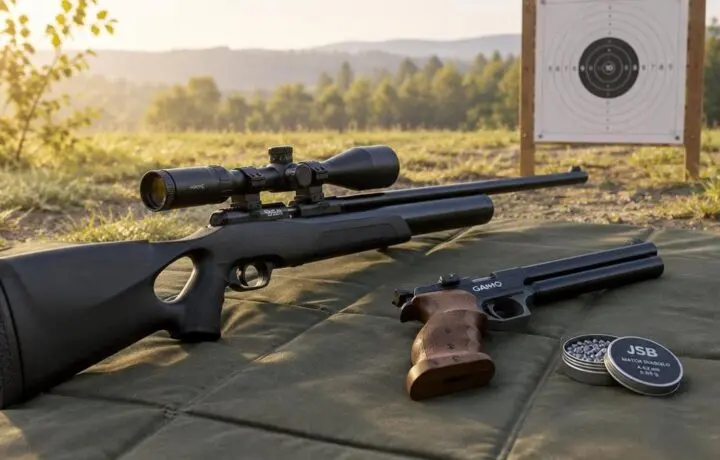
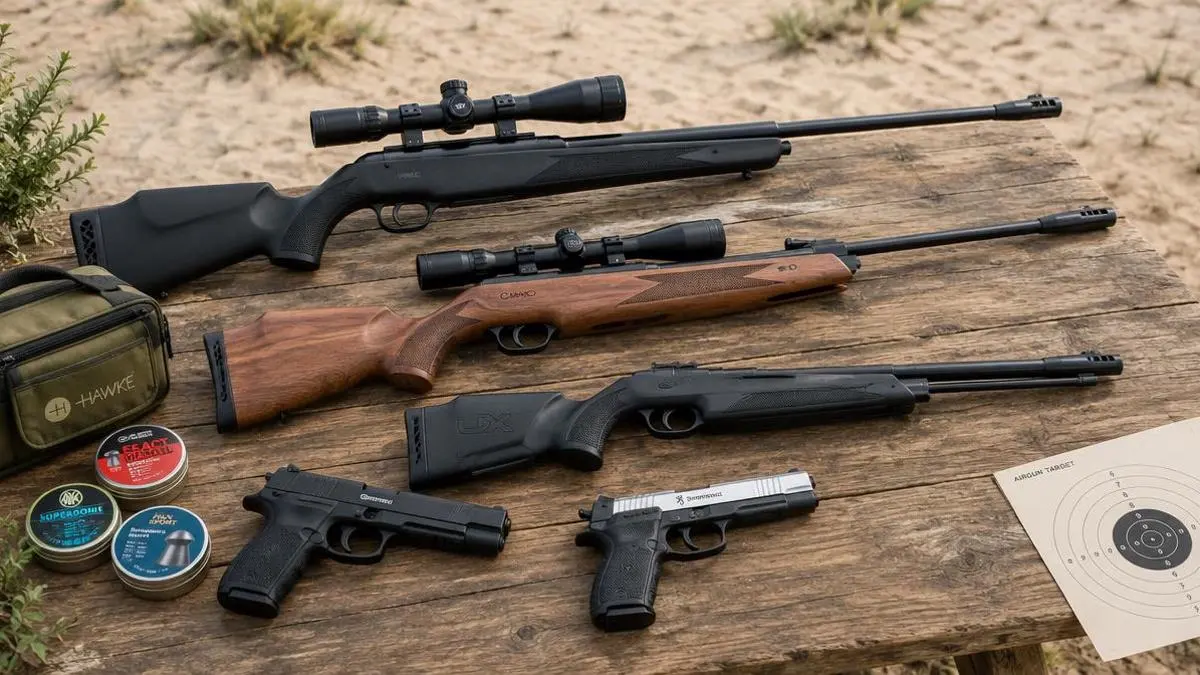
Choosing an airgun is easier when the decision starts with your routine, not a product label. A backyard target shooter, a plinker and someone who wants a compact pistol for short practice sessions each need very different handling, loading and maintenance characteristics. The useful question is not which model sounds most powerful, but which airgun setup you can operate safely, hold steadily, feed consistently and look after properly. That approach makes it easier to compare airgun power systems, pellet gun calibres, accuracy and day-to-day features without chasing specifications that do not suit your purpose.
Start with the job, not the mechanism
Begin by defining where you will shoot and what a normal session looks like. For paper targets at modest distances, easy cocking, a predictable trigger and a comfortable stock may matter more than maximum energy. A compact air pistol can be convenient for short-range practice, while an air rifle usually offers an advantage because of its longer sighting setup and additional points of contact.
Your shooting position matters too. If you will shoot from a bench, weight and balance may be less troublesome than they would be during standing practice. A fore-end can settle well on a rest but become tiring when held unsupported. Likewise, a stock that feels comfortable in one position may place the trigger awkwardly in another.
Think about storage and transport before buying. The airgun should have a dry storage place, and the pellets and charging equipment should be kept away from children and anyone who has not been instructed in safe handling. Check local rules before purchase, including any requirements for use, transport, storage or shooting on private property.
How the power system changes ownership
Spring-piston guns use a spring and piston. They do not need gas cartridges or a separate air tank, which can make them straightforward to keep ready. Their firing cycle can produce movement, though, so a steady hold and consistent technique are part of getting good airgun accuracy. Cocking effort also deserves attention if several people will use the gun or if sessions tend to be long.
Gas-ram systems replace the spring with a gas strut. They still require cocking. Their handling characteristics differ from spring systems and can vary between designs. The practical check is simple: can every intended user cock it without straining? Can they do so while maintaining safe muzzle control?
CO2 guns are convenient for recreational sessions because cartridges provide the operating gas. They can be especially appealing in pistols and some repeating designs. Temperature, cartridge fit, seal condition and the manufacturer's instructions all affect operation. A gun that begins producing inconsistent shots, inconsistent cycling or obvious gas loss should not be treated as showing normal wear without checking the manual and having the problem assessed.
Pre-charged pneumatic, or PCP, guns store compressed air in a reservoir. They can offer a consistent firing cycle and are often chosen when consistency and extended target sessions are priorities. They also add equipment and planning: the reservoir must be filled, equipment pressure limits must be followed, and the system should never be modified or overfilled. Select a PCP setup only if its charging routine is practical for you.
Calibre, pellets and realistic accuracy
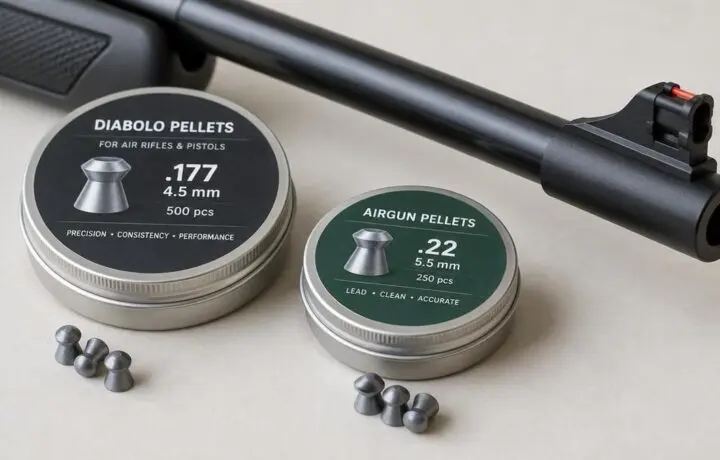
Pellet gun calibres are not a ranking from best to worst. The useful choice depends on the target, the power system, pellet availability and the distance and conditions in which you will shoot. A smaller pellet is commonly associated with target work, while larger pellets may suit recreational uses, but the gun's manual and intended design should guide the decision.
Pellet fit is an accuracy check. Pellets should load without being forced. Skirts should not be badly damaged in the tin. Mixing shapes and weights during a session can make it harder to identify whether a change in group size comes from your technique, the ammunition or the gun. Start with pellets from a consistent source, then change one variable at a time.
Do not judge accuracy from a single group. Confirm that the sights or optic are secure, use a repeatable position and inspect the target at a safe distance. If groups suddenly open up, check the stock screws, mounts, barrel condition and pellet fit before blaming the design. A loose sight or damaged pellet can imitate a larger problem.
Features that matter after the session
I find that a comfortable grip and usable controls influence practice more than styling. I look for a trigger that can be operated without shifting my shooting hand, sights that are clear in my normal lighting, and loading steps that I can perform without placing my fingers near an unsafe area. Ambidextrous controls may help shared households, but only if the rest of the fit works for each user.
Adjustable features are helpful when they solve a fit problem. A cheek rest, length adjustment or changeable grip can improve alignment. However, extra parts also create opportunities for looseness. After I adjust anything, I check that fasteners remain secure and that nothing interferes with the safety, trigger, loading mechanism or barrel.
For optics, I favour a setup that matches the airgun and my shooting distance, rather than assuming that more magnification is automatically useful. An optic that will not hold its setting, shifts under recoil or leaves me struggling to find a sight picture is a poor day-to-day choice. Iron sights can be perfectly suitable for learning alignment and may keep the equipment simpler.
Make safety and maintenance routine
I treat every airgun as loaded until I have personally confirmed otherwise. I keep the muzzle pointed in a safe direction, keep my finger outside the trigger guard until I am ready to fire, and use a dependable backstop that can safely contain both pellets and possible misses. Eye protection is sensible for everyone on the range. I never rely on a safety catch as a substitute for muzzle discipline. I do not shoot where a pellet could cross a road, path, neighbouring property or occupied area.
I read the manufacturer's instructions before loading, cocking, filling or lubricating the airgun. I do not alter the power, bypass safety devices, drill components or use unsuitable lubricants. Those changes can create legal problems that are difficult to see from the outside.
I note symptoms that deserve immediate attention rather than repeated test shots:
– A new scraping, grinding, cracking or hissing sound.
– A safety that does not engage or behave consistently.
– A barrel, stock, sight or mount that becomes loose.
– A sudden change in velocity, accuracy, cocking effort or trigger behaviour.
– Pellets that are difficult to seat, become damaged during loading or fail to leave the barrel normally.
I stop using the airgun if a pellet may be lodged in the barrel, if a pressure system shows damage or if the firing cycle seems abnormal. I keep it pointed safely, unload it only as the manual directs, and seek service when the cause is not clear. Routine cleaning, dry storage, appropriate seal care and a quick pre-session inspection can prevent faults from becoming unsafe ones.
The best choice is therefore the one that fits my use, body, storage arrangements and willingness to maintain it. A manageable power system, calibre, stable sighting setup and clear safety routine will usually support more enjoyable target shooting than a complicated airgun selected for specifications I do not need.