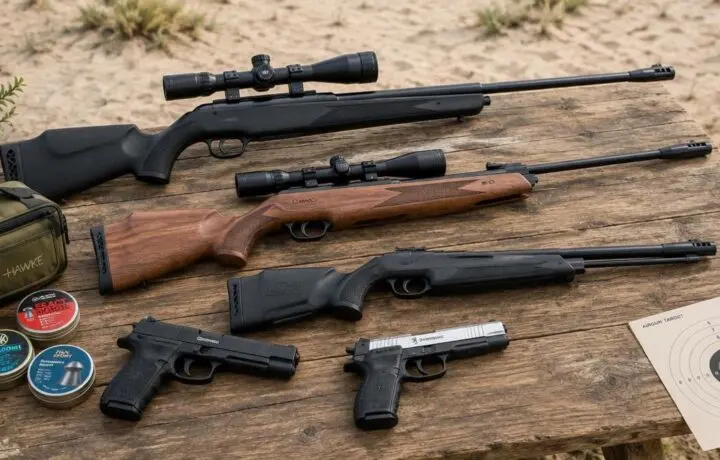
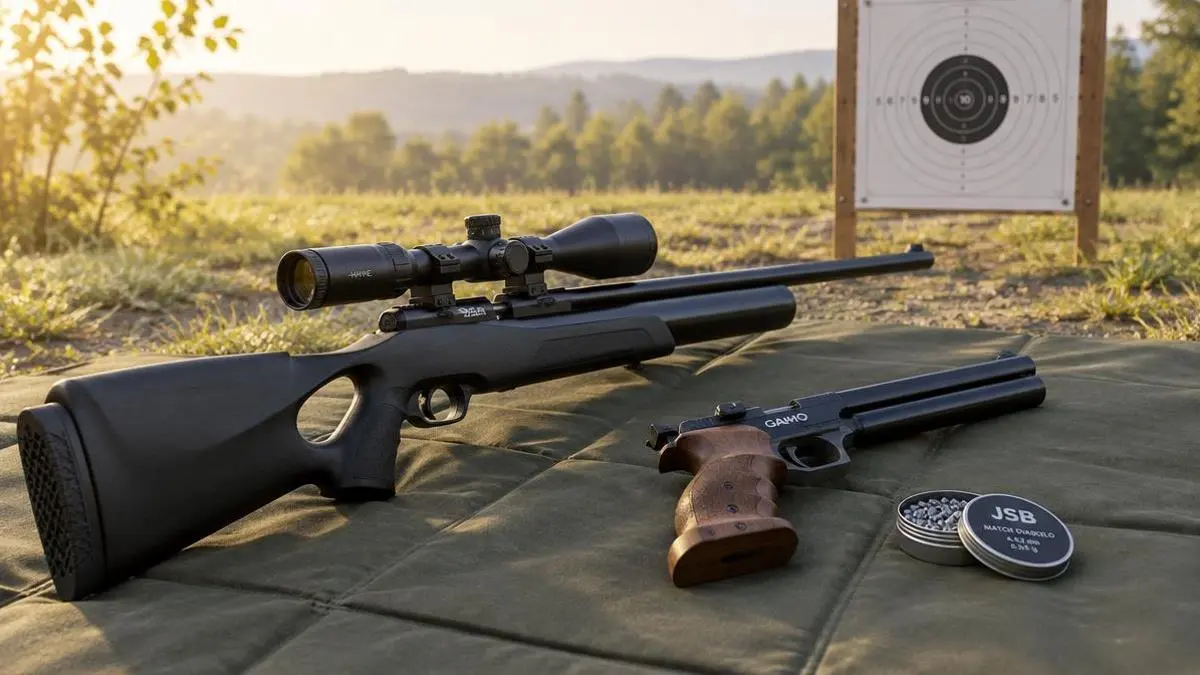
Choosing between a shoulder-fired gun and a compact pistol is mostly about what fits. The best choice should match your target distance, where you will shoot, how you like to handle the gun and how much you are willing to practise the basics. A new shooter might like the size of a pistol, while a target shooter might prefer the hold of a rifle. In a home target-shooting setup, the best choice is the one that makes it possible to practise safely and again and again, not the one that simply looks familiar.
Start with the target, not the shape
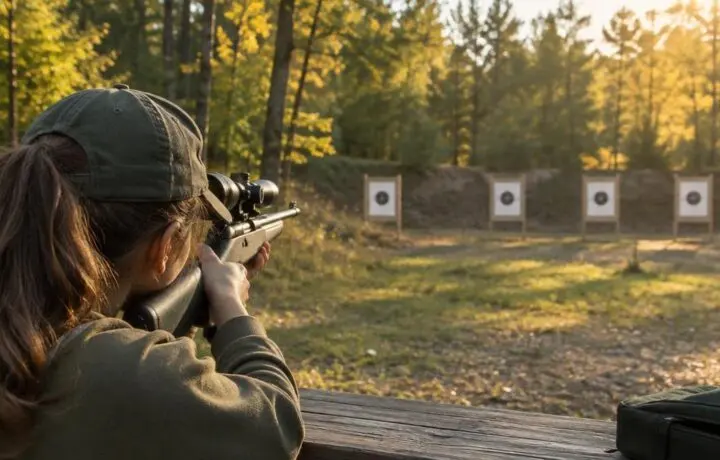
Imagine a new shooter has a backstop and wants a simple plan: put up a paper target, shoot from the spot and spend a quiet half-hour working on accuracy. The distance, the way you stand and the size of the target should decide the choice before looks or extra parts are considered.
A rifle is usually easier to hold steady because it has a stock, a longer sight line and two places where the shooter and the gun meet. These things can help keep the sights in line while learning how to control the trigger and follow through. For target shooting, especially when standing or using support, that extra stability is often helpful.
An air pistol asks more of the shooter. It is held away from the body with one or both hands, and small movements at the grip can make a difference on the target. That challenge is not always bad: some people like the focus it requires, while others prefer the time and small size.
What the longer gun changes
The benefit of an air rifle is control. A stock gives the shooter a cheek and shoulder position. The extra length can make the sight picture feel less rushed. These features help new shooters see whether a missed shot was caused by trigger pressure, breathing, movement during the shot or a bad aiming point.
An air rifle can also be comfortable for a practice session. The shooter can try positions such as sitting, kneeling or standing, as long as they are steady and suitable for the gun. This makes the gun useful for someone who wants to build the basics by firing a few shots at close range.
The downside is handling. A longer gun needs space to store, carry and bring to the range. It might feel awkward indoors, and the stock can make some positions difficult. The rifle must never be moved around carelessly at home. Treat it as loaded until you know for sure that it is not and that it is safe, as the maker says.
Where the small size is useful
An air pistol is easier to store and might be less of a problem when the shooting area is small. Its compact size can suit a controlled practice session in which the shooter works on grip, aiming and trigger pull without setting up a rifle position.
That convenience comes with a learning curve. Without support, an air pistol can show a shaky grip or a hurried trigger pull straight away. New shooters might see the shots spread out on the target even when the sights look right. The answer is usually practice, not a tighter grip or an attempt to change the gun.
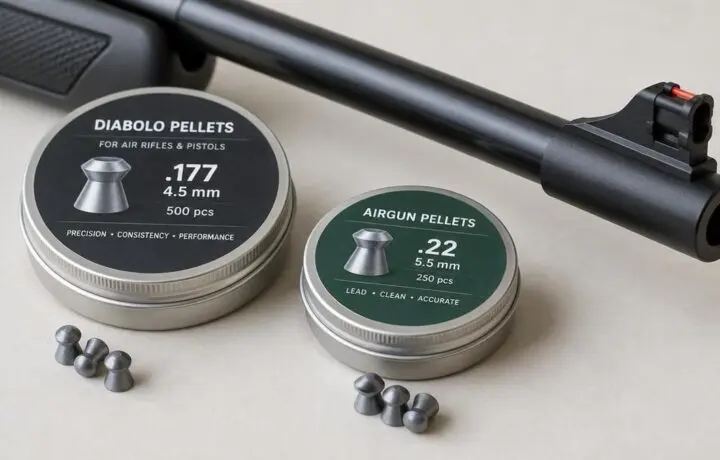
Pistols also work in different ways. Some need a loading step between shots, while others are made for speed. Before choosing, check what the maker says about loading, use, the right ammunition and storage. A real practice plan is more important than a feature that sounds good on a list.
The handling choices at home
For shooting, the simple questions are: Where will the gun be kept? How will the target area be checked before every session? Can the shooter stay safe while loading, unloading and moving? Will the equipment be used by one person or under supervision?
A useful check is:
– Pick the rifle if steadier aiming, longer practice and a shoulder-supported position are most important.
– Pick the pistol if small storage, short sessions and a more difficult two-handed hold fit the plan.
– Wait to buy if there is no backstop, storage plan or clear way to keep people and animals away from the shooting area.
The last point is more important than the choice between the two. A pellet can go through a target or bounce off a hard surface. Use a backstop made for the equipment, check it and place the target so a miss stays in place. Never rely on a fence, a board, something improvised or a surface that has not been proven to stop the pellet.
Local rules might say where airguns can be used, how they must be stored and who can use them. These rules change, so check with the relevant authority before shooting. The maker's instructions should be the guide for using and taking care of the gun.
A smart choice for the setup
For many new shooters who focus on paper targets, a rifle can make it easier to aim well. The stock and longer sight line can make early progress easier to see, helping the shooter find out what they need to improve rather than fight with movement. That does not mean every rifle is right for every place, nor does it mean that safe handling is unnecessary.
An air pistol might suit someone with enough space, a suitable close-range area and a real interest in learning to use a small gun. It can also help with rifle practice by making grip and trigger control more obvious. If tight groups are the goal, the shooter should expect to need some time to get used to it.
No matter which one you choose, start with your plan. Decide how often you will practise, what targets you will use, how you will keep the gun safe and what steps the manual says to take. Keep the inside and moving parts clean only as the manual says; do not try to change the gun to make it more powerful or different.
Wear eye protection, point the gun in a safe direction, keep your finger off the trigger until you are ready to shoot and always treat the gun as loaded until you are sure it is not. Keep pellets and guns away from children and others who should not use them. A careful, repeated plan is what makes either gun into a fun tool.