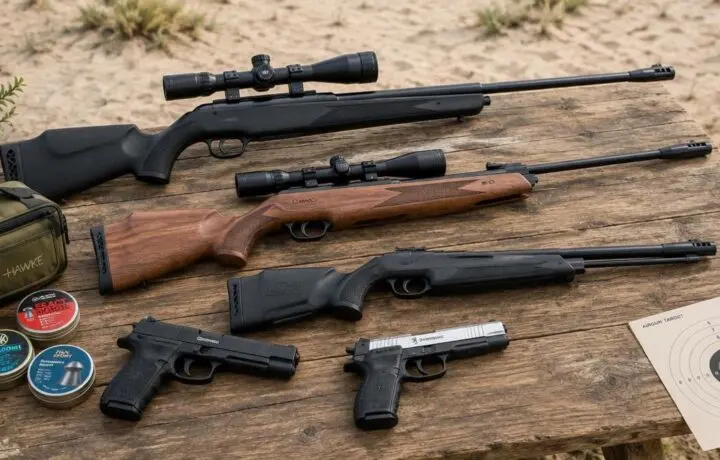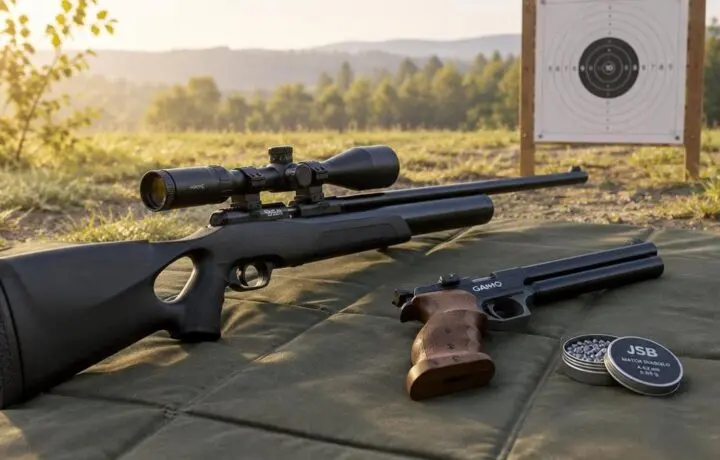
The .177-versus-.22 argument has no universal winner. The sensible choice depends on what you shoot, where you shoot and how often you practise. A .177 often follows a flatter path and can cost less to feed. A properly matched .22 can carry more energy. Useful differences, certainly, but neither tells the whole story. These benefits matter. Neither tells the entire story. Your usual shooting distance, the type of target, how easy it is to get ammunition, the design of the rifle and your willingness to check your equipment after use all matter. A sound decision should also consider backstops, local rules and the manufacturers' instructions.
What the calibre numbers actually tell you
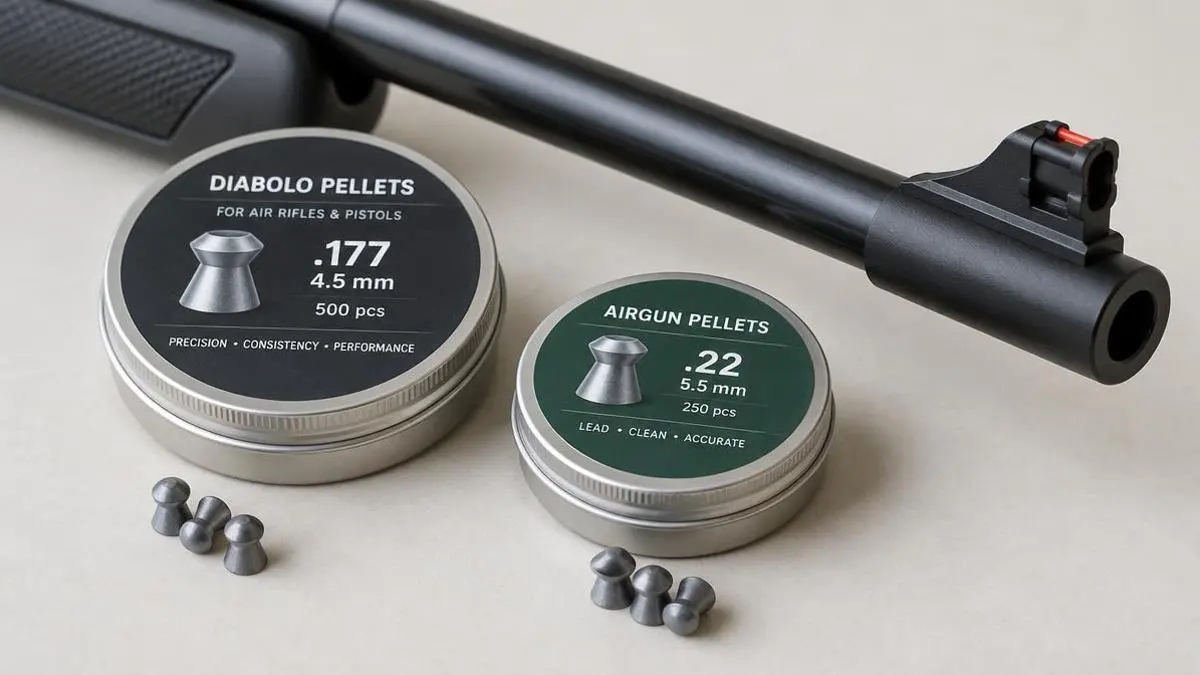
Those numbers refer to pellet diameter in inches; they are not a score or a power rating. .177 is smaller than .22. That difference affects the pellet's weight, the shapes available, how it fits in the barrel and how it moves when fired. It does not tell you how accurate, powerful or quiet a rifle will be.
The power source, barrel, pellet shape, speed and consistency of the set-up work together. A matched .177 rifle may do better than a .22 rifle that is not suited to the task, and two rifles in the same calibre can give different results with different pellets.
So treat calibre as one part of the decision, rather than the decision itself. Check the markings on the barrel or receiver. Follow the manual. Never guess that a pellet will work just because it looks similar, and do not change the barrel or loading system to fit a calibre.
Why .177 often works best for paper targets
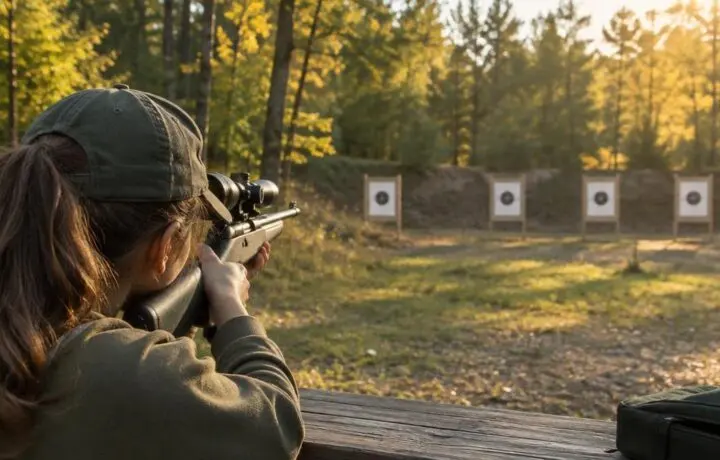
For paper targets, .177 is often the straightforward place to begin. Its pellets are usually lighter. In similar set-ups, they can travel along a flatter path over short to medium ranges. That can make aiming and adjustment easier for someone starting out and shooting at a fixed distance.
The smaller calibre is also commonly associated with target shooting and regular practice. Availability can be an advantage. .177 ammunition may be cheaper, although the actual price and choice depend on where you live, the brand, the pellet type and the shop. Look at what you can get rather than assuming every shop has the same options.
There is a catch, of course. A lighter pellet may be more affected by wind, and high speed does not always mean tight groups. If a rifle is rough, inconsistent or poorly supported, changing calibre will not fix the problem. Try a pellet at a safe range and check the groups at the distance you plan to shoot.
Where .22 can make sense
Compare like with like and the .22 pellet will usually be the heavier one. In a rifle built for it, that extra weight can deliver power and create a different feel when it hits the target. This may suit people who want a more noticeable impact on certain targets or who shoot at longer distances, where a heavier pellet may behave better.
The larger calibre usually drops more as distance increases compared with a .177 set-up. More drop is not the same thing as poor accuracy. It means the shooter needs to learn the rifle's path, check the zero at a known distance and understand how distance changes where the pellet hits.
A .22 is not automatically better for paper targets either. What works depends on the target, range, set-up, backstop and local rules. Use targets that are safe for the airgun and ammunition. Never shoot at surfaces that could cause the pellet to bounce or break.
Comparing trajectory, energy and cost
Trajectory and energy are related to the shot, but they describe different things. A flatter path can make aiming easier because the pellet moves less over the distance. Energy shows how much motion the pellet has at a certain point in flight and depends on both weight and speed. A heavier pellet might retain energy in one set-up, while a different rifle and pellet combination can change that.
Ignore which calibre sounds more impressive and ask a more practical question. Ask whether the rifle gives consistent results with ammunition you can get, whether its path suits your range and whether the target and backstop are appropriate. Manufacturer information can help you get started. Real accuracy still depends on how the pellet fits, the wind, your position and the condition of the equipment.
The price printed on one tin is only part of the cost. Consider how many pellets you will use, whether the ammunition is easy to obtain and whether the rifle needs a particular shape. Buying a lot before testing can leave you with ammunition that does not group well or load properly. Start with an amount from a trusted source and keep track of what works.
Signs of problems that should not be ignored
Changing calibre cannot cure a dirty, damaged or poorly functioning rifle. If groups suddenly get bigger, the point of impact changes without reason, loading becomes difficult, there is a noise, the sight is loose or the pellet does not seat properly, pay attention. Stop shooting if the rifle sounds wrong, has damage or a cracked stock, or acts differently after being dropped or hit.
Begin with the boring checks; they solve more problems than people expect. Make sure the sights or scope are tight. Look at the stock and screws for damage or looseness without overtightening them, and use the pellets specified for the model. Check for barrel blockages by following the manufacturers' unloading and checking steps. Never fire a pellet to clear a blockage, and do not take apart a system unless the manual allows it and you know what you are doing.
Oil only as instructed. Some airguns need little barrel cleaning, while others have care requirements. Using the wrong oil or putting oil in the wrong place can damage parts or create unsafe conditions. If velocity changes, there is a leak, a seal is faulty or another mechanical issue appears, stop using the gun and get help rather than trying to fix it yourself.
Choosing based on your plans
Lean towards .177 when the plan is frequent paper-target practice, simple sight correction and a broad choice of ammunition. It works well for learning how to aim and pull the trigger, provided the rifle is comfortable and the pellet is right for the barrel.
Lean towards .22 if you prefer a heavier pellet, accept the extra trajectory correction and already have a suitable rifle and backstop. It can be enjoyable for target shooting. Its benefits depend on how everything works together, not simply on the size of the calibre.
Before buying, write down your distance, the type of target, how you will store the gun and where you can get ammunition. Handle the rifle properly, wear eye protection, keep the barrel pointing safely and keep the gun away from others. Check the rules before shooting, including where and when you can fire, how to carry and store the gun and what is allowed. The best calibre is the one that fits your plan and helps you practise carefully and consistently.