A shooter who has 20 minutes after work needs more than a pistol that looks good on a shelf. The cartridge should go in without trouble. The loading process should fit the time available. The sights and grip should make careful shots feel repeatable. For target practice, the best choice is rarely the most complicated model. It is the one that fits the shooter, the available backstop and the amount of attention the routine allows. This case-style guide follows that decision from first purchase through storage and maintenance.
Start with the session you will have
Think of a shooter who sets up a paper target in a lawful, secure backyard range area or an appropriate indoor facility. The goal is not competition or hunting. It is a short practice session after work: deliberate groups, some sight adjustment if needed and enough enjoyment to make the routine worth repeating.
That use case immediately narrows the field. A pistol that is awkward to load, difficult to grip or fussy about its controls can turn a simple session into a mechanical chore. A straightforward single-shot design may suit someone who values trigger practice and minimal handling. A repeating pistol may be more engaging for shooting, but it can bring extra loading steps, moving parts and a larger grip or frame.
A convincing replica can also be part of the appeal. Appearance should not outrank fit. Check whether the grip allows a stable hold and whether the controls can be reached without shifting the hand. Small differences in balance matter when the pistol is held at arm's length for shots. If possible, handle the unloaded model before buying, while following the retailer's or manufacturer's safety procedures.
What CO2 power changes at the target
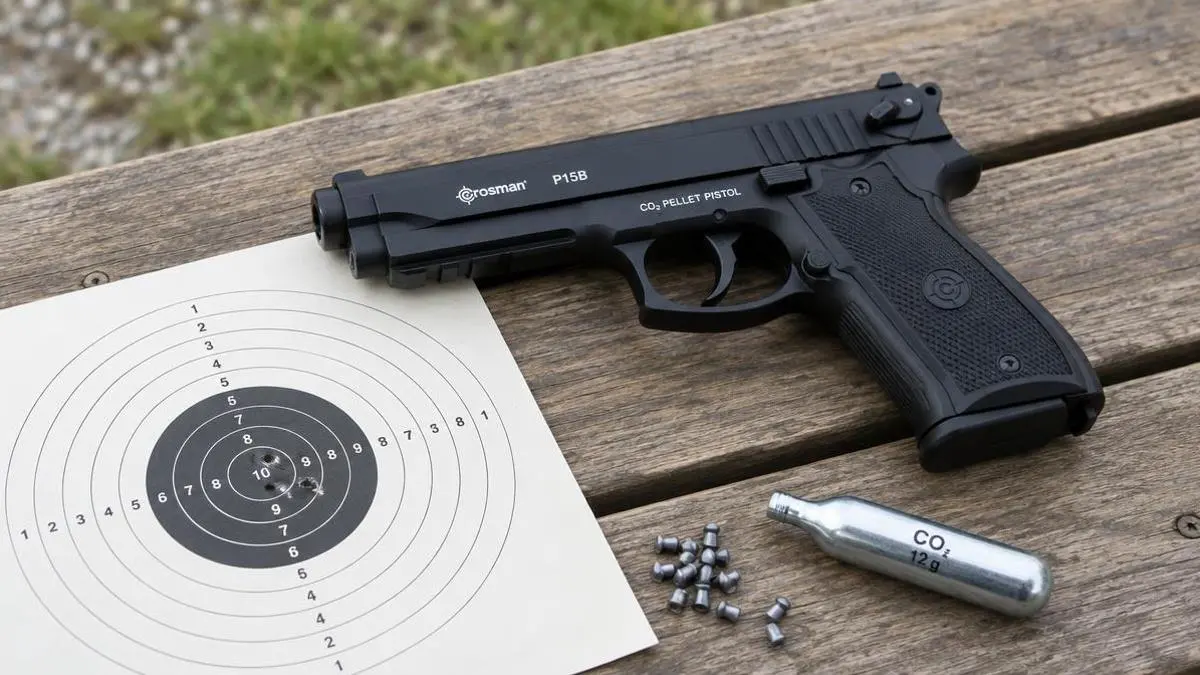
CO2 airguns are convenient because a cartridge provides shots without a separate pumping routine. That makes them well suited to a session, especially when the shooter wants to concentrate on sight alignment and trigger control rather than preparing each shot. The trade-off is that performance depends on the condition of the cartridge, the seal, the temperature and the pace of shooting.
Rapid firing can make the cartridge and valve behave less consistently than they do during a measured sequence. Colder conditions may also affect how the gas performs. These are not reasons to reject CO2 power; they are reasons to use a steady rhythm and judge a pistol by realistic expectations. A shooter seeking tight groups should allow the pistol to settle between shots rather than treating every string like a speed exercise.
Pellets matter as well. Try ammunition recommended by the manufacturer and avoid assuming that every pellet shape or weight will behave identically. If groups suddenly open up, check the basics before blaming the pistol: cartridge seating, pellet condition, grip, sight alignment, target distance and whether the barrel or seals need attention.
Loading and controls can decide whether practice stays fun
For the after-work shooter, loading is part of the experience. A model that accepts pellets cleanly and presents its controls clearly will usually be easier to live with than one that requires precise finger placement or repeated manipulation. Look for instructions that explain cartridge installation, piercing, magazine use and safe unloading clearly. If the manual is vague, that is a warning sign.
Some CO2 pellet pistols use a rotary or removable magazine, while others require a different loading routine. Neither approach is automatically better. A magazine can keep the session moving, but it adds a component to inspect and handle. A simpler loading system may slow the pace while making each shot deliberate. Match the mechanism to the purpose rather than choosing based on a feature list alone.
Sights deserve attention. Fixed sights can be perfectly suitable for practice when they align well with the intended target. Adjustable sights offer flexibility, but they only help if the adjustment system is clear and holds its setting. A useful first check is whether the pistol produces a group before making changes. Moving sights to compensate for a poor grip or unsuitable pellets can create confusion instead of improvement.
Build a safe target routine before chasing accuracy
Pellet pistol safety begins before the CO2 cartridge is installed. Confirm that local rules permit the activity, choose a location where an errant pellet cannot endanger people, animals, vehicles or neighbouring property, and use a pellet trap with a suitable backstop. Never rely on a paper target. Follow the manufacturer's guidance for distances, approved ammunition and the direction in which the pistol may be pointed.
For the session in this example, the safest routine is deliberately boring:
– Keep the muzzle pointed in a safe direction and treat the pistol as loaded until it has been checked.
– Wear appropriate eye protection, keep people and animals away from the firing area, and use a clear cease-fire procedure.
– Keep fingers outside the trigger guard until the sights are on the target and you have decided to fire.
– Do not shoot surfaces, water, glass or improvised targets that may cause pellets to ricochet.
– Remove the cartridge. Unload the pistol according to the manual before storage, transport or inspection.
The exact procedure can vary by design. The owner's manual takes priority. Verify local requirements rather than relying on advice written for another jurisdiction or an older model.
Maintenance keeps a pistol dependable
A short session should end with a quick check, not a complicated workshop routine. Inspect the pistol for damage, confirm that the chamber and magazine are clear, and store pellets separately from the airgun if that suits the manufacturer's instructions. Keep the pistol in a secure place where unauthorised users cannot access it.
CO2 systems depend on seals. Careless handling around the cartridge area can create leaks or cause damage. Use products and procedures approved by the manufacturer; do not add oils, alter valves, enlarge passages or attempt modifications intended to increase power. Such changes can create safety problems, damage the pistol and affect its status or warranty.
If a cartridge loses pressure quickly, the pistol develops a new leak, the trigger behaves differently or the point of impact changes sharply, stop using it until the cause is understood. Consult the manual or a qualified service professional rather than forcing a stuck component. Regular, modest care is more useful than cleaning or experimentation.
Choosing among the pellet pistols for your priorities
The right CO2 pellet pistol is the one that makes a safe, repeatable session easy to start and easy to finish. For one shooter, that may mean a straightforward loading system and a comfortable grip. Another may prefer a repeating action, adjustable sights or a realistic handling experience, provided the extra complexity is welcome and understood.
Before deciding, ask whether the pistol fits the intended target space, whether its loading process feels manageable, whether replacement cartridges and recommended pellets are readily available, and whether the manual explains storage and safe operation clearly. Read product documentation and look for consistent user feedback about handling and reliability, while treating isolated claims cautiously.
In the case of the 20-minute practice session, convenience is valuable when it supports control. A calm setup, measured shooting pace, suitable backstop and basic maintenance will contribute more to airgun target practice than a long list of features. CO2 power can make that routine accessible. Responsible habits are what make it sustainable.