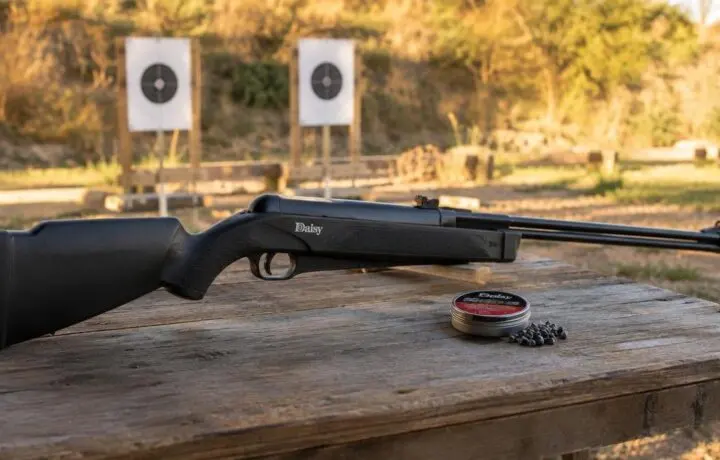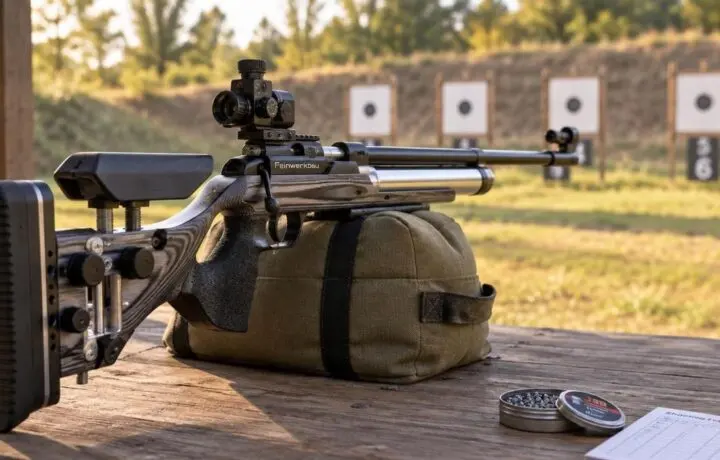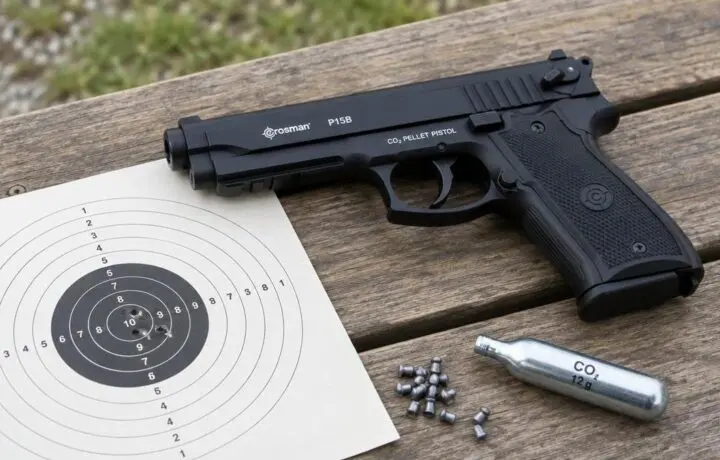
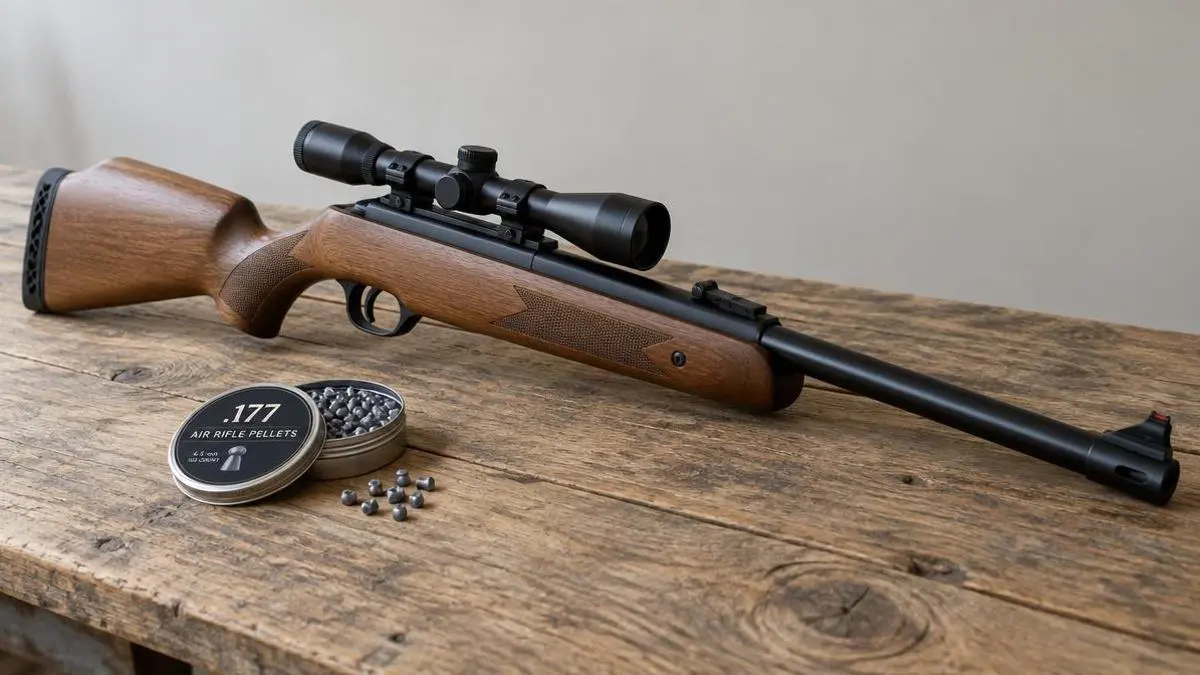
For paper targets and casual shooting, the choice of calibre affects more than the number on a tin of pellets. The .177 format is often the place to start because it supports a flat-shooting setup, has a wide range of pellets available and gives clear target results. The calibre alone does not make a rifle a good choice. A good decision also takes into account how easy it is to cock, how the trigger feels, how the stock fits, what sights are available and how far you can shoot at home or at a club. Here is how to sort through these factors without confusing a list of features with a promise of performance.
Why .177 remains a strong target calibre
A .177 pellet is relatively light, so it can follow a flatter path at the short and moderate distances often used for paper targets. That can make aiming easier because the shooter may need to consider less drop than with a heavier pellet at the same setup. The benefit is practical rather than magical: the rifle, pellet and distance still need to work together.
Small target holes are another reason the calibre stays popular for paper practice. A clean group is easier to judge when the aim point and pellet marks are clear. This makes the format useful for beginners learning sight alignment, trigger control and follow-through, as well as for experienced shooters working on consistent habits.
The downside is that light pellets can be more affected by wind than heavier ones. Shooting outdoors in changing conditions may show that quickly. A rifle that feels comfortable indoors or on a covered range may need more careful holdover and wind judgement outside. Check the manufacturer's advice on ammunition rather than assuming all pellets will behave the same.
The rifle matters more than the label
The term "pellet guns" hides a problem: different shooters need different kinds of control. A rifle for backyard-style target work, where allowed, may need to be small and easy to handle. A rifle used for practice sessions may be better judged by its balance, how comfortable the stock is and how consistently the shooter can operate it without getting tired.
Power is part of that decision. More power can give a flatter path at some distances, but it may also mean a heavier rifle, more effort to cock, more movement during the shot or a louder sound. For paper targets, too much power can also make finding a safe backstop harder. Choose a setup that fits the target distance and the safe area you have, rather than assuming maximum output is always better.
The type of action affects the experience too. A spring-powered rifle can offer a self-contained setup, while other types may reduce some physical demands but bring different storage, maintenance or operating needs. Read the manual before deciding that a mechanism will suit you. The simple option is often the one you can use correctly every time.
Match the rifle to your shooting routine
Start with the place where you will shoot. Measure the distance, figure out the direction of the firing line and think about whether you can put up a proper backstop that will safely catch pellets. If the space is small, a long or heavy rifle may become hard to handle. If you shoot often, a stock that feels comfortable during a check may become uncomfortable after many uses.
Fit needs a close look. Can you hold the rifle without straining your neck? Do the sights or scope line up naturally? Are you forcing your head into position? Is the grip comfortable without making your trigger finger reach awkwardly? A steady and relaxed position is usually more important than a list of features.
For air rifle target shooting, the trigger and the sight picture are important. Look for controls that are clear and predictable, with instructions in the manual. Don't judge a trigger by what the adverts say. A beginner may prefer a setup that encourages careful use rather than one that feels too light or complicated.
A useful set of questions to ask is:
– Will I mostly shoot indoors, outdoors or at a club?
– Can I safely handle the rifle's weight and the way it needs to be cocked or loaded?
– Are replacement parts, recommended pellets and basic instructions easy to find?
– Do the sights work with my eyes, or will I need additional equipment?
– Can I keep the rifle and ammunition safe when not in use?
These answers help narrow the choices more reliably than a list from a website.
Read specifications with a little scepticism
Specifications are helpful when they answer a question. Total weight can show whether a rifle is easy to handle. Balance is also important. Barrel length may affect how it feels, but it doesn't guarantee accuracy on its own. A speed number may be measured under conditions that don't match your pellet, rules or range setup.
Look for details that can be confirmed with the owner's manual or the manufacturer's current information. Check the pellet size, how to load, how to cock, what lubrication is needed and any warnings about dry-firing. If a scope is shown in a picture, make sure it is included rather than assuming it comes with the rifle.
A rifle that needs changes to stay working may not be right for someone who wants simple fun. On the other hand, a more adjustable model may make sense for a shooter who likes to fine-tune their setup. Neither is always better. The question is whether the extra settings solve a problem you actually have.
Safety and care are part of the choice
Treat every airgun as if it is loaded until you have checked it yourself. Keep the muzzle pointing in a safe direction, keep your finger off the trigger until you are ready to fire, and never count on a safety mechanism instead of good handling. Wear eye protection, use a backstop that works with the rifle and pellet, and make sure nothing is in the way beyond the target.
Check rules and range guidelines before buying or using an airgun. Rules can change depending on where you are and may cover transport, storage, where you can shoot, age, power or shooting near homes. Manufacturer instructions should take priority over general advice, especially for loading, unloading, lubrication and storage.
Care should stay within those directions. Look for worn parts, damaged seals, changes in how hard it is to cock or a drop in accuracy. Stop using the rifle if it has a problem, makes an unusual noise or shows damage. Don't try to change its power or bypass safety features; these can create mechanical and handling issues.
A good .177 rifle is one that makes shooting calm and consistent and can be kept in shape without guesswork. For target shooters, that means choosing something that is easy to handle and reliable before looking for more power. The best choice is the rifle that fits the shooter, the place to shoot and the responsibility that comes with using it.