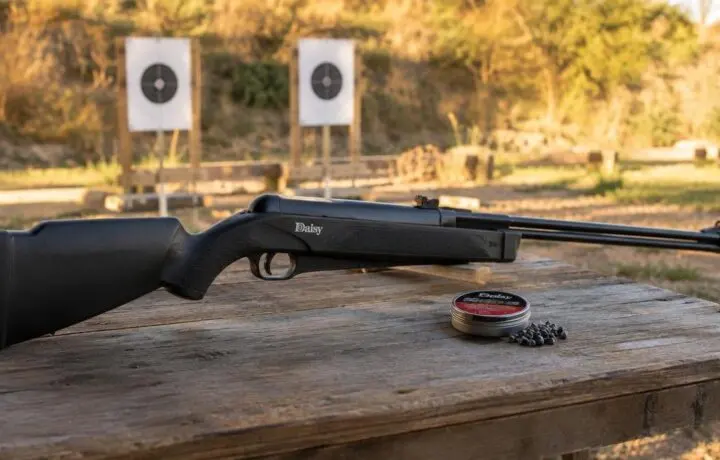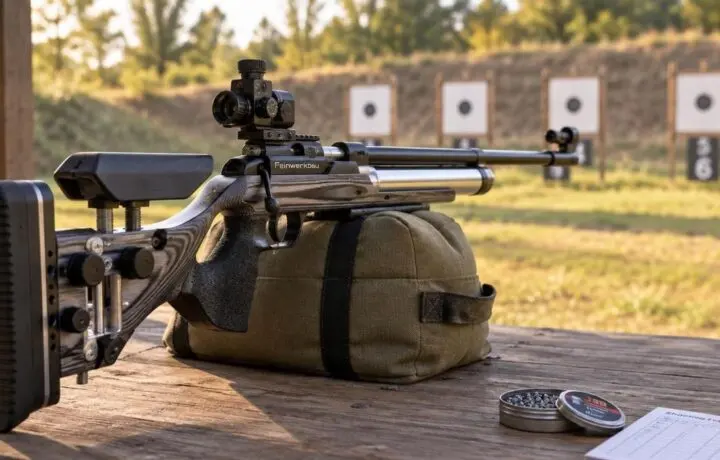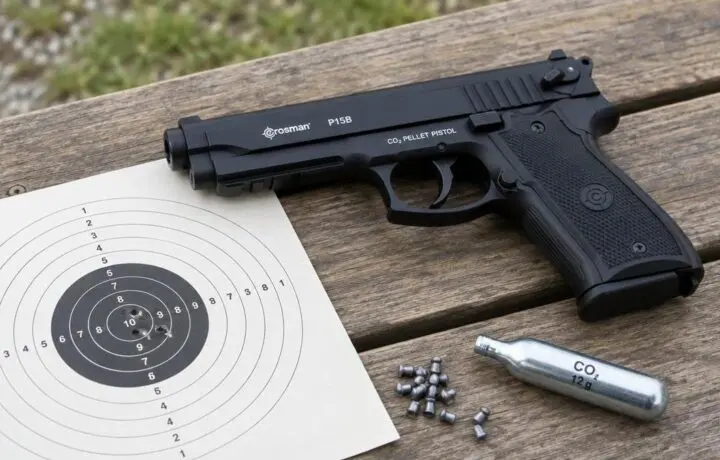
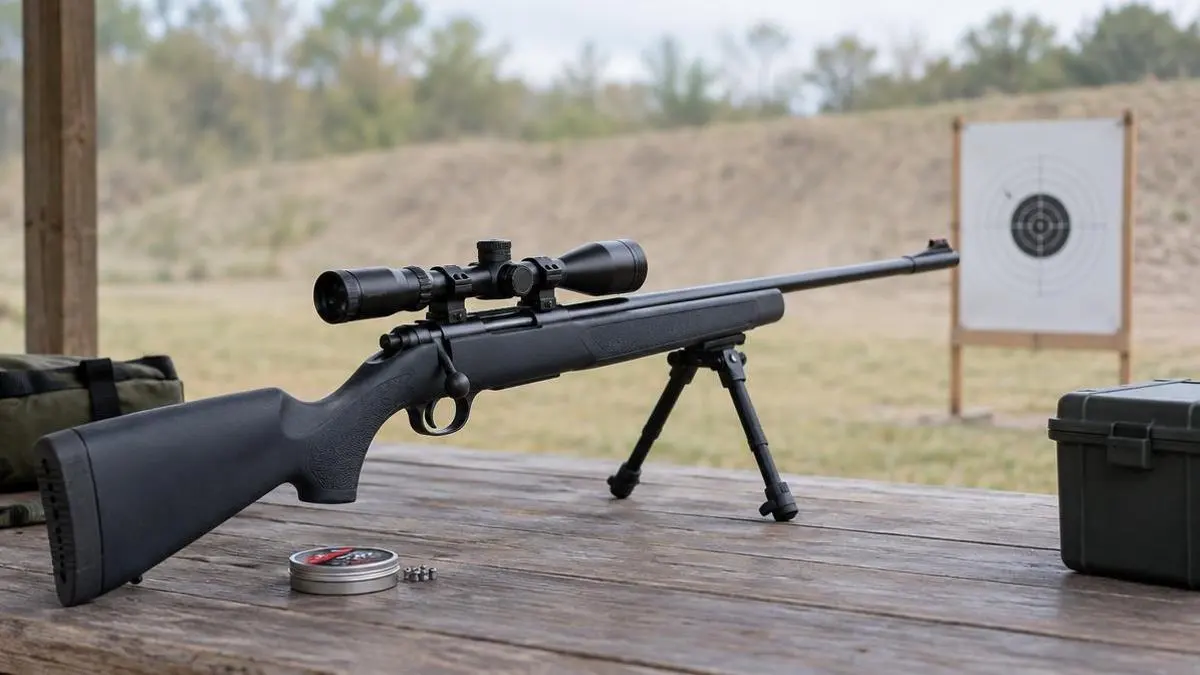
A small budget does not mean you cannot have a good time shooting at targets. The trick is to find a good rifle, rather than a cheap one that causes problems with its fit, sights, noise or cleaning. For people who shoot for fun, and those just starting out, the best air rifles under two hundred dollars are not all the same. The right choice depends on where and how often you shoot, and whether you want something simple, reusable or quieter.
This guide looks at those choices without suggesting that a low price is the same as quality.
Start with the job, not the deal
Before looking at models, think about what you need. A rifle for paper targets at short range may differ from one used often on a larger outdoor range. Consider where you can shoot, what safe area lies behind the target, how much noise your surroundings can handle and whether you want to load each shot by hand or fire several times without reloading.
Beginners often compare how powerfully a rifle shoots because that number is easy to see. That can be misleading. A rifle that is easy to hold, has suitable sights and fits its user may produce better real-world results than a stronger rifle that is difficult to use. Trigger feel, balance, stock shape and adjustment options matter too, especially when the main aim is learning to shoot.
A simple spring-powered rifle may suit someone who wants everything in one package. A multi-pump rifle may suit someone who wants to vary the effort and power for each shot. A CO2 rifle may appeal to someone who simply wants an enjoyable trigger-pulling experience. Each type has its own trade-offs.
How the power source changes the choice
Spring-powered rifles are common among inexpensive air rifles because they need no extra parts, such as cartridges or tanks. They can be good for target shooting, but the effort needed to cock them and the movement they make when firing may take some getting used to. New owners should expect to spend time learning, rather than blaming every missed shot on the ammunition.
Gas-powered designs work in a similar way, but feel different when cocked and fired. They may suit people who like the break-barrel style but want a different experience. The important questions are whether the rifle remains comfortable over time, and whether its sights or scope-mounting method meet your needs.
Multi-pump rifles let the shooter choose how many times to pump before each shot. This can be useful where much power is unnecessary, or for people who do not want another power source. The drawback is that repeated pumping can become tiring and distract from shooting technique.
CO2 rifles are usually easy to use and can offer a smooth, straightforward way to shoot. Their performance may change with temperature, firing speed and the quality of the cartridge or seal. They also require a supply of cartridges. That is not a problem in itself, but it belongs in the ownership cost, alongside pellets, targets and cleaning equipment.
PCP rifles need their total cost checking. The rifle may fit the budget, while the pump or tank needed to use it pushes the overall cost higher. A complete, easy-to-use set-up is often better than a powerful one that is difficult to keep filled with air.
What budget buyers often miss
The advertised package may not contain everything needed to shoot comfortably. Check whether it includes sights, a suitable way to mount a scope if required and the basic items needed for the rifle to work properly. A low price becomes less attractive if extra parts are needed before the rifle is useful.
Fit can be disappointing too. A stock that is too long, an awkwardly placed part or a cocking method that is difficult for the user can make practice frustrating. If possible, try the rifle before buying. When buying online, check its dimensions and the return policy rather than relying on photographs.
Read the maker's instructions before accepting claims made online. Check which pellets are recommended, how to load the rifle, how to use oil and any warnings about firing without a pellet. A pellet of the correct size will not necessarily work the same way in every rifle. Testing a few pellets is reasonable; forcing one, altering the rifle or attempting unsafe modifications is not.
A common mistake is buying a scope first. New shooters may fit one because it looks like an upgrade, only to discover that the rifle's sights were sufficient for their range, or that the scope does not suit the rifle's movement. Learn how the rifle works and confirm that its scope-mounting method is suitable before spending money on extras.
Match the rifle to the shooting position
For paper targets, a place to sit, a reliable way to hold the target and a safe area behind it are as important as the rifle. A simple set-up can be enjoyable when the shooting position is consistent and you record your groups. If every shot is taken from a different place and distance, it becomes harder to tell whether a problem lies with the rifle, pellet or set-up.
Noise and location should influence your choice. A rifle that seems suitable outdoors may still be unsuitable where noise is a concern, or where local rules prohibit airgun use. Check the rules, the site's requirements and any range policies before buying. Never assume that an airgun is permitted simply because it is not a firearm.
For someone learning to shoot, a steady method is more useful than maximum power. Use the same rest, keep the distance consistent and change one thing at a time. Record the pellet used and any sight adjustments. These small habits show whether the rifle is producing groups and prevent the common mistake of changing equipment after every poor session.
Safe ownership starts before the shot
Airgun safety is not something to add after buying; it is part of choosing the set-up. Treat every rifle as loaded until you know it is not. Keep the muzzle pointed in a safe direction and your finger off the trigger until you are ready to shoot. Wear eye protection, and make sure everyone nearby knows when the rifle is loaded, unloaded and safe.
The target must have a backstop that can stop pellets, with a clear area around it. Do not shoot at hard surfaces, glass or anything that might cause a pellet to ricochet. Store the rifle and pellets safely away from people who should not use them. Follow the maker's instructions for unloading, carrying and storage.
Before each session, carry out a few simple checks:
– Look at the barrel, stock, sights and cocking or loading parts for damage.
– Make sure the barrel is clear and that the correct pellets are being used.
– Check the shooting area, backstop and surrounding space for people, animals or other dangers.
– Stop shooting if the rifle behaves differently, makes unusual sounds or does not load and fire as it should.
Choose the rifle you will keep using
The best buy for your budget is the one you can use repeatedly without making the rest of your set-up harder to manage. Consider the power source, how the rifle feels, the cost of maintaining it and what is permitted where you live. You may end up with a spring rifle, a flexible multi-pump or a simple CO2 option. There is no reason for every shooter to choose the same type. The best choice is the one that makes you want to practise again and again.