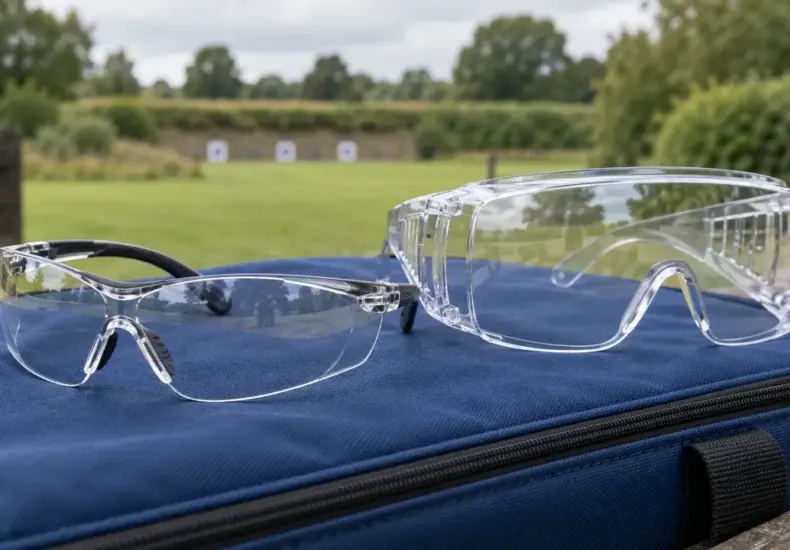
Buying Eye Protection for Your First Airgun Club Visit
A pair of shooting glasses can look very comfortable in a product photo. They may become irritating within minutes of wearing them. The bridge can slip. A temple can press under an ear defender. Your prescription frames may touch the lens. These small details are best discovered at home, not while a club instructor is waiting for you to get ready.
Ask the club before you order
Before buying, ask the club which eye protection it requires and whether suitable loan equipment is available for a first visit. Tell the club if you wear prescription glasses. A clear answer can save you from ordering something that looks right but does not meet the venue’s requirements. Keep the manufacturer’s product description and instructions, especially if the seller’s listing contains little beyond a photograph and the word ‘safety’.
Crosman’s airgun safety guidance calls for shooting glasses for users and others nearby. It also says that ordinary prescription glasses should have shooting protection over them. The practical point is simple: everyday spectacles do not mean you can skip checking the required protection. Ask the club to help you choose a suitable arrangement instead of guessing from appearance.
Try the combination you will actually wear
Check the fit with your prescription glasses, if you use them, and any hearing protection the venue requires. Look ahead, then turn your head normally. Shooting glasses should stay where you put them without constant adjustment. If an over-glasses model pushes your frames down your nose, that particular combination deserves another look.
Wear shooting glasses for a few minutes instead of judging them from a quick glance in a mirror. Pressure behind the ears is easy to miss at first. Contact between two sets of lenses can also be missed. A model that works for a friend may simply have the wrong bridge or frame shape for you; paying more does not automatically solve that.
Read what the seller actually promises
Check that the listing identifies the product and its stated protective rating clearly enough to compare with the club’s requirements. Do not treat a dark tint, thick-looking lens or sporty frame as evidence of impact protection. If the specification is missing, ask for it before ordering. A photograph cannot answer that question.
Clear lenses are worth discussing for indoor use. For an outdoor venue, ask about suitable lenses for its conditions instead of buying several colours immediately. Keep the purchase modest and specific. It is easier to work out what you need after a supervised visit than after an evening of comparing accessories you have never worn.
Give the glasses a home
Use the cleaning method recommended for the lenses and coatings. Put shooting glasses in a protective pouch or case, away from loose equipment that can rub against them. Before a visit, look for damage. Make sure you can see clearly through shooting glasses. If something is cracked, badly scratched or loose, ask about replacement instead of improvising a repair.
For a first session, the useful result is not an impressive collection of gear. It is approved protection that fits, stays comfortable and lets you pay attention to the instructor. Sort that out before arriving. There is one less distraction at the club.