Choosing an airgun is not about calibre, looks or how fast it claims to go. The power system plays a role in how the gun feels and works. It affects how much effort it takes to cock, how loud it is, how consistent the shots are, how much upkeep it needs and what gear you must bring to the range. A beginner who wants to shoot in the garden may care about different things from someone who spends hours testing groups. Knowing the power systems helps you see the trade-offs clearly before buying. It also helps avoid ending up with a gun that does not match what you expect.
Spring-piston rifles: familiar mechanics with real technique
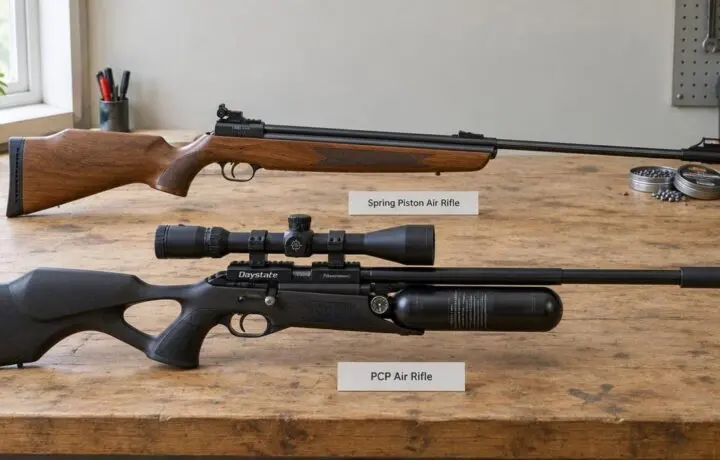
Spring-piston air rifles use a spring to store energy. To load one, you pull back the barrel or use a lever, which moves the spring into place. When you pull the trigger, the spring pushes a piston forwards. That pushes air behind the pellet and sends it flying. Many models are cocked by breaking the barrel or using a sidelever or underlever.
This system is self-contained. There is no tank to fill and no cartridge to replace. That makes it simple and appealing for people who want a ready-to-use setup. It can also be a good choice for occasional target work because the rifle is ready to use anywhere a safe range is available.
The downside is movement during the shot. Spring-piston rifles have a firing cycle: the gun moves forwards, then back. That can make them sensitive to how the shooter holds the stock. A tight grip or uneven pressure on the shoulder can throw off the group size. These rifles reward a repeatable hold instead of a hard, fixed grip such as you might use with a firearm.
Cocking effort also matters. A rifle that feels light for a shot may feel heavy after many shots. That can be tiring for younger or smaller shooters. Always follow the manufacturer's instructions for cocking. Never leave a rifle unattended unless the instructions say it is safe to do so.
Gas ram systems and the changing feel of the shot
Gas ram air rifles replace the coil spring with a sealed gas strut. The basic idea is the same: cock the rifle, release the stored energy and the piston pushes air to shoot the pellet. The difference is in how the power system behaves and feels, not in the process.
A gas ram system may offer a less springy firing cycle. It can stay cocked for a while without the concerns you have with a traditional spring. That does not mean it needs no maintenance. Seals, pivot points and other moving parts still need care, as the manual explains.
These rifles still need a consistent hold. Do not assume a gas ram feels like a PCP airgun with no recoil. Cocking effort, weight, balance and noise vary a lot between models. You cannot rely on labels to know if a rifle fits your routine.
When comparing spring-piston and gas ram models, ask questions: How often will the rifle be cocked? Does the shooter feel comfortable with the effort? Can the stock be held consistently? Will the rifle be transported safely between sessions? A simple system may be more valuable than power that makes the rifle hard to control.
PCP airguns: consistency with equipment around them
PCP airguns use a reservoir filled with compressed air before shooting. The reservoir feeds the firing valve. This means the rifle can fire without a cocking stroke for every shot. That makes the trigger feel calm and reduces movement that can interfere with shooting.
The main benefit is consistency over a string of shots. That is true as long as the reservoir is filled correctly and the rifle stays within its pressure limits. PCP airguns are popular with shooters who want groups, adjustable handling or longer shooting sessions. The rifle is only part of the setup.
You may need a pump, compressor or filled air cylinder. You will also need fittings and a pressure gauge. Read the gauge as the manufacturer says. Using the equipment raises safety and cost issues. Use gear rated for the reservoir. Check it for damage. Keep parts away from heat and rough handling.
A PCP may work well for a target shooter who already has a regular place to fill the rifle. It may not be the choice for someone who wants a low-tech, grab-and-go routine. Never change valves, pressure settings or regulators to get more power. That can cause problems and safety risks. It can also hurt the rifle's reliability.
Pneumatic pellet guns beyond the PCP category
The term pneumatic pellet guns includes airguns that use air but do not all work like a pre-charged reservoir. Multi-pump and single-stroke designs, for example, compress air through pumping by the shooter. Some are small and quiet. Others are built for a deliberate target rhythm.
Multi-pump systems let the shooter adjust how much air is stored within the manufacturer's limits. That flexibility helps when moving between close-range practice and harder targets. It adds a repeated step before each shot. Pumping technique must stay consistent for good results.
Single-stroke systems are often praised for their routine and controlled shooting. They may not fire quickly. Their pace encourages careful aim and follow-through. As with every system, check the seals and pumping parts. Stop using the gun if it feels harder to pump, leaks or changes how it works.
CO2 systems: convenient, with temperature-related limits
CO2 pellet guns use cartridges or a refillable source of carbon dioxide. They are often easy to use and have recoil. That makes them good for target practice. They are also good for shooters who do not want to cock a rifle before every shot.
CO2 performance changes with temperature and with how quickly you shoot. Rapid fire cools the cartridge, while cold weather changes the pressure and affects consistency. You might notice different reports, a lower point of impact or slower operation. These are signs to pause and follow the manufacturer's instructions. They are not reasons to fix or modify the system.
Installing a cartridge needs care. Make sure the gun is unloaded. Keep your fingers away from moving parts. Use the correct cartridge type. Never pierce, heat or puncture cartridges, and dispose of them according to waste rules and the manual.
Matching the power system to your shooting routine
A smart choice starts with your range, not the marketing label. Think about how the gun will be used, where it will be stored and how much extra gear you are willing to carry.
– Pick spring-piston or gas ram systems when you need a self-contained rifle and are ready to learn a steady hold.
– Choose a PCP when consistent target work and a calm trigger justify the filling gear.
– Look at single-stroke or multi-pump pneumatics when a slower, hands-on routine fits your session.
– Consider CO2 when easy handling and informal shooting matter more than stable performance in changing temperatures.
Before buying, handle the unloaded gun if you can. Check the balance, how hard it is to cock or pump, the safety controls, how to load it and whether the stock fits you. Read the manual before loading pellets or adding gas. Check the rules on possession, transport, discharge and storage. Rules vary by location and can change.
Every gun needs a backstop, eye protection, a clear firing line and a way to confirm that it is unloaded. Keep the muzzle pointed in a safe direction. Keep the action open when possible. Store the gun locked up where unauthorised people cannot reach it. Power-system differences affect performance. They never replace safe handling and responsible use.