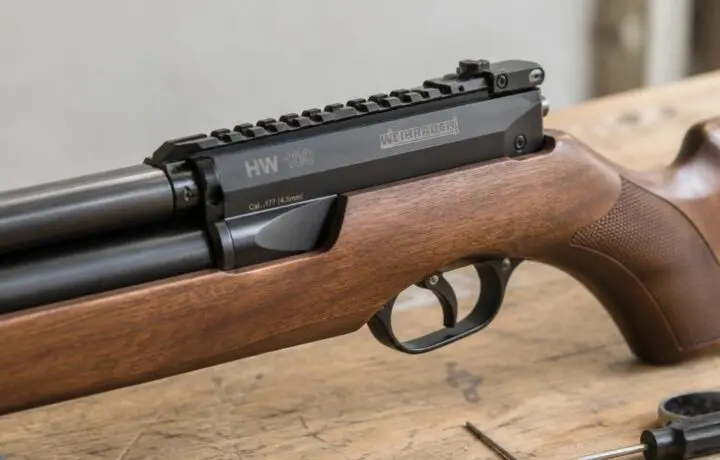
Choosing between a spring-piston rifle and a PCP rifle becomes important when a simple target-shooting routine starts to ask more of the gear. A spring-piston rifle that feels easy for a few shots may become tiring when many shots are taken, while a PCP rifle that feels smoother may need charging equipment and upkeep. Think of a shooter setting up paper targets at a permitted range after work. The best choice does not depend on labels or fashionable names. It depends on how the shooter prepares, shoots, stores and maintains the rifle.
The power source changes the shooting experience
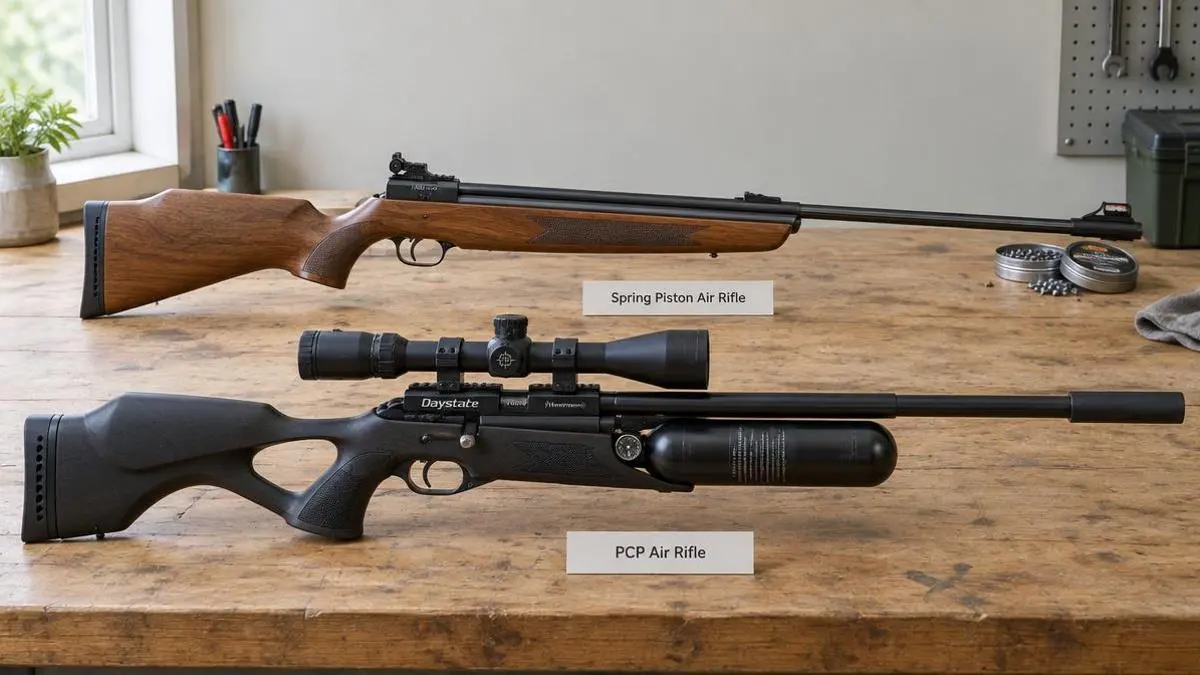
A spring-piston rifle stores energy in a spring or a gas ram. When it fires, this stored energy pushes the piston forwards. To fire each round, the shooter must cock the rifle by breaking the barrel or using an underlever. The spring-piston rifle's design is self-contained. There is no need for an air bottle, hand pump or charging station. That makes the spring-piston rifle simple to understand and operate.
There is a trade-off. Inside the spring-piston rifle, the piston moves forwards quickly when the shot is released, creating recoil and vibration. These movements affect how the rifle reacts in the hands. That does not mean a spring-piston rifle cannot be used for target shooting. It does require a consistent, relaxed hold and a repeatable shooting position. If the shooter grips the rifle tightly or changes shoulder pressure between shots, the groups may wander, even if the sights and pellets are correct.
A PCP rifle, or pre-charged pneumatic rifle, stores compressed air in a reservoir. Each shot uses some of that air, so the reservoir must be filled with high-pressure air using suitable equipment. That might mean a hand pump, a compressor or a pre-filled cylinder. Because the PCP rifle does not rely on a spring or piston, the shot feels much calmer, with less movement during firing.
This smooth behaviour is one reason PCP rifles appeal to target shooters. They allow a shooter to focus on alignment and trigger control without being disturbed by recoil. A PCP rifle does not remove every source of error, however. Poor pellets, a poor scope mount, inconsistent technique or an unsuitable rest can still ruin accuracy.
A Saturday session exposes the practical difference
Consider the shooter setting up targets after work. With a spring-piston rifle, preparation is straightforward. The shooter checks the rifle, loads the pellets, confirms that the targets are set and verifies that the backstop is safe. The shooter then loads one shot at a time. The pace is naturally slower, which can help with practice, and there is no concern about whether the rifle has enough stored air for the session.
With a PCP rifle, the session starts earlier. The shooter must check that the reservoir is properly charged and that the charging device is compatible and in good condition. Once everything is ready, the PCP rifle allows a string of shots with less effort per shot. That convenience matters when practising groups, adjusting the sights or sharing the range with another shooter.
PCP systems also bring a planning issue that can be easy to overlook: the PCP rifle is only as convenient as its air supply. A hand pump requires effort. A compressor or cylinder adds cost, takes up storage space and means another item to inspect. If the PCP rifle will only be used occasionally, that extra set-up may feel like too much work. If the shooter plans to use the PCP rifle regularly, the smoother shooting cycle may justify the added routine.
Accuracy depends on more than the action
In air-rifle comparisons, accuracy is often reduced to the power system. That view is too narrow. Pellet fit, barrel condition, trigger control, stock design, sight quality, wind and the shooter's ability to repeat the position all matter. The real question is not which power system is automatically accurate, but which power system helps the shooter produce results.
Spring-piston rifles can be rewarding when the shooter learns their hold. The rifle should be allowed to move rather than being clenched against the shoulder or squeezed tightly at the fore-end. A small change in support can alter the point of impact. That learning curve appeals to some shooters. It can frustrate a beginner who expects the spring-piston rifle to behave like a firearm with no recoil or like a fixed bench-rest instrument.
PCP rifles usually make it easier to remove some movement from the shot. Their low recoil helps a shooter diagnose errors because they are less likely to disturb the sight picture during firing. Still, a PCP rifle is not automatically right for every target. PCP performance should be considered alongside the intended distance, pellet choice, sighting system and the rules or restrictions of the place where it will be used.
Cost and maintenance continue after purchase
The purchase price is one part of the decision. A spring-piston rifle generally has a simple support set-up. It still needs sensible care. Keep the rifle clean according to the manufacturer's instructions, inspect screws and fasteners periodically, and protect the bore and exterior as directed. Avoid leaving the mechanism cocked unless the manual specifically allows it. Never attempt a repair or power increase without the necessary knowledge and manufacturer-approved guidance.
A PCP rifle adds the air supply to the ownership equation. Charging equipment needs care, too. Seals, fittings and fill connections should be checked regularly for damage or unusual leaks. Use equipment rated for and intended for the PCP rifle's charging requirements; do not substitute containers, fittings or pressure sources. The manufacturer's instructions should guide filling, storage, lubrication and service procedures.
For either system, a safe backstop is more significant than a convenience feature. Inspect the target area before every session and account for ricochets and pass-throughs. Keep people and animals away from the line of fire. Wear eye protection. Confirm the rules before shooting, including restrictions on discharge, transport, storage and the use of airguns on private property.
Match the rifle to the routine, not the trend
For the shooter who wants a self-contained set-up, enjoys a rhythm and is willing to learn a consistent hold, a spring-piston rifle can be the sensible route. The spring-piston rifle suits target practice where portability and minimal supporting equipment matter more than strings of shots.
A PCP rifle is more compelling for someone who practises often and values a smooth shot cycle, and expects to spend extended sessions refining groups. It makes sense when the shooter is also managing charging equipment and following its safety requirements.
Before deciding, write down the routine: where the rifle will be used, how often it will be cocked, whether the equipment must be carried and how much time will be spent shooting from a stable position. That short exercise usually clarifies the decision better than chasing power. Responsible target shooting is easier to sustain when the rifle, air supply, maintenance habits and local rules all fit the plan.