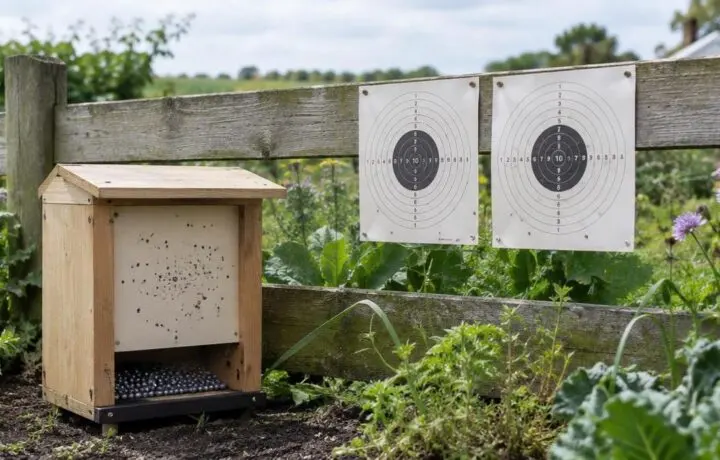
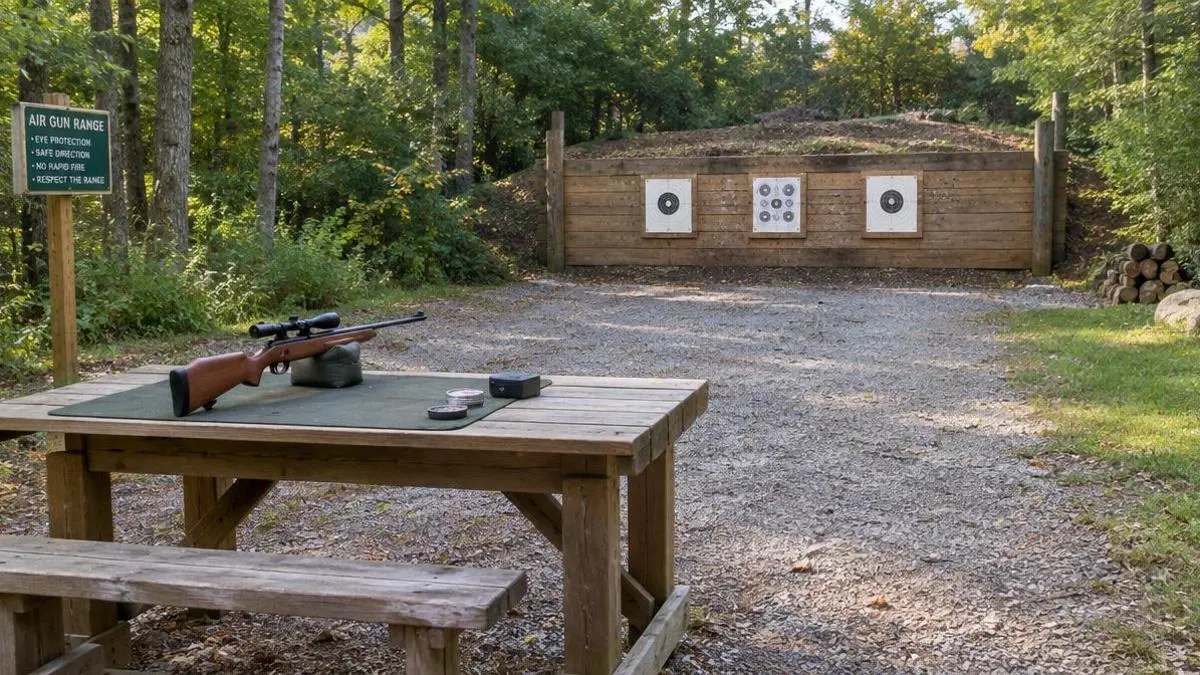
Most airgun accidents do not begin with an exotic failure. They begin with an ordinary moment between shots, when someone handles the gun too casually. The protective habits are simple, but they only work when they are repeated every time: control the muzzle, confirm the backstop, keep the trigger untouched until the target is confirmed and ready and secure the gun when shooting ends. Consider a Saturday setup, with a new owner placing paper targets at a permitted spot. That ordinary scenario shows where good airgun safety begins and where small lapses can create problems.
Start with a controlled setup, not the shot
Set the area up before reaching for a pellet. Decide where the gun will be handled, where people may stand and what lies beyond the target. Check the manufacturer's instructions for the action, safety catch, loading procedure and ammunition type. The safety catch helps, but it cannot replace muzzle control or a finger kept outside the trigger guard.
The owner in this example should first make the shooting area visibly separate from walkways, doors, windows, driveways and places where someone might appear unexpectedly. Verify the rules before shooting on property or using a public facility; permission from a landowner does not necessarily answer every legal or practical question.
Everyone near the firing line needs eye protection, observers included. Pellet fragments, damaged targets and bits of a damaged surface can travel in unexpected directions. If a visitor arrives, a dog wanders near the setup, or the shooter loses track of who is downrange, stop handling the gun, keep it pointed safely and wait until the area is controlled again.
Muzzle awareness has to continue between shots
Muzzle awareness continues after the shot. It means knowing where the barrel points at every moment, not just while taking aim. Carry an air rifle with the muzzle pointing in a direction and the action positioned as the manufacturer recommends. When setting down an air pistol, place it so the muzzle cannot sweep across another person or fall onto the trigger.
Interruptions are a common trouble spot. The shooter opens the action to clear a pellet, hears a noise behind the firing line and turns with the gun in hand. The safer response is to stop, keep the muzzle pointed in a safe direction, remove the finger from the trigger area and make the gun safe according to its instructions before addressing the distraction.
Treat an airgun as loaded until you have personally checked its condition. If you receive it from someone or if it has been unattended, do not rely on an assurance. Keep the muzzle controlled, point it in a direction and follow the manufacturer's unloading and clearing procedure. Never look down the barrel to check whether it is clear.
Build a backstop that can handle mistakes
Paper shows where a pellet landed; it does not stop the pellet. The target and the backstop are different parts of the setup. The backstop must be positioned directly behind the target and be capable of stopping pellets without sending fragments or ricochets towards people, animals, buildings, roads or neighbouring property. Soft loose materials may not perform consistently, while hard surfaces such as stone, metal or concrete can create rebounds. The correct arrangement depends on the airgun, pellet, distance and site, so follow the target and backstop manufacturer's guidance and inspect the setup regularly.
Plan for the miss, not only the perfect shot. A pellet may miss, pass through a target holder or strike a frame. Check the surrounding area and the space behind it before every session. Do not shoot at water, glass, improvised metal objects or targets that can break into pieces. If the backstop becomes damaged, saturated, displaced or difficult to see, stop shooting until it is corrected.
Conditions change while a session is under way. Wind may move paper or lightweight target holders. Fading daylight can make it harder to identify the target and its surroundings. A session that was safe earlier may no longer be safe when visibility changes.
Make loading and clearing deliberate
Load only after the muzzle is directed at the backstop and the firing line is ready. Keep the finger outside the trigger guard while opening the action, inserting a pellet, closing the action or fitting a magazine. Use the ammunition specified for that airgun; a pellet that fits poorly can affect function, create an obstruction or cause another problem.
If the gun does not fire, keep it pointed at the backstop. Wait according to the manufacturer's instructions before attempting to clear it. Do not immediately look into the breech, barrel or muzzle. A delayed discharge is uncommon but possible with some systems, and the exact procedure varies by design. When something feels unusual, such as resistance, a damaged pellet, a stuck action or a change in sound, stop and consult the manual or a qualified professional rather than forcing parts or attempting an unsafe modification.
Before each shot, pause for a plain check: target identified, backstop confirmed, people accounted for, muzzle aligned, finger clear and eye protection in place. That pause takes seconds. More importantly, it stops careless movements from becoming routine.
Store the gun as carefully as you shoot it
Finish the session at the firing line, not while walking back to the house or car. Unload the airgun using the manufacturer's procedure. Check the chamber or loading area, put the gun in its recommended condition and keep ammunition from the stored gun when practical. Do not assume that an empty magazine means the chamber is empty.
Airgun storage should prevent access, protect the gun from damage and avoid unsafe pressure or power-system practices. Use a case, cabinet or other secure arrangement appropriate to the design. Follow the instructions for gas cartridges, compressed air and any remaining pressure. Keep pellets in a container, especially where children or pets could reach them. An unloaded airgun left on a shelf is still accessible, and that alone makes it a hazard.