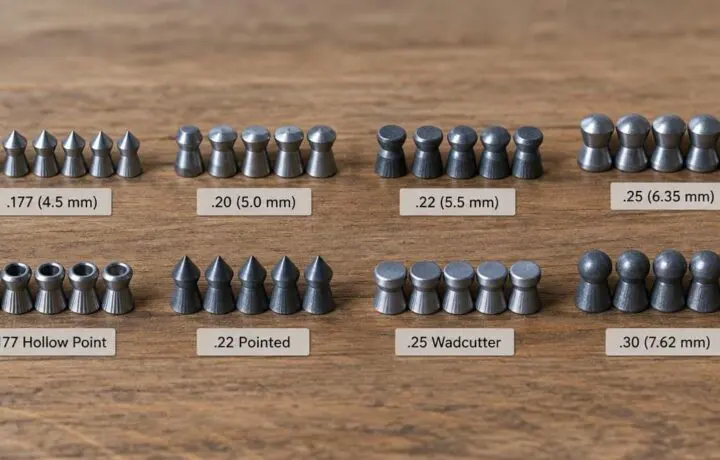
The same airgun can behave differently when fed pellets of different weights or shapes. A small change that seems minor on the tin can alter the point of impact, the grouping and the loading, as well as how well the pellet works on a particular target. Choosing a pellet is less about finding a single design that is always best and more about matching it to the airgun, the distance, the target and the shooting conditions. A careful selection process also helps avoid wasting money on tins that never provide the consistency you need.
Why pellet weight changes the shot
Weight determines how a pellet responds to the airgun's power and how quickly it leaves the barrel. Lighter pellets may produce a flatter trajectory in some setups, while heavier pellets can carry momentum efficiently and may be less easily disturbed by modest wind. No result is guaranteed across every spring-piston, gas-ram, CO2 or PCP airgun.
The useful question is not simply whether a pellet is light or heavy, but whether its weight suits the powerplant and the job. A light pellet that performs well in one rifle may produce large groups in another. A heavier design may make a low-powered air pistol feel less efficient or alter its point of impact. Changes in velocity can also affect how a spring-piston airgun vibrates or recoils. The most accurate option is often the one that gives the airgun a stable, repeatable shot cycle.
Weight is usually listed in grains. The difference between tins may be small enough to overlook when shopping, but it is worth recording. If the pellet weight changes, confirm the zero rather than assuming the previous sight setting still applies. With a chronograph available, readings can help reveal how a particular pellet interacts with the airgun. For ordinary target work, group size and consistent technique matter more than a single velocity figure.
Domed pellets for general-purpose accuracy
Domed pellets have a rounded head and are often a sensible starting point for recreational shooting. The curved nose offers a balance between flight stability and resistance to minor handling damage. Many shooters choose this profile when they want one pellet for paper targets, plinking and general range practice, rather than a design optimised for one narrow purpose.
Their main trade-off is target marking. A rounded head does not cut a circle in paper, so scoring small bullseyes can be less convenient than with a flat-nosed design. Domed pellets can also vary in head dimensions, skirt shape and manufacturing consistency between brands and models. If a tin produces flyers, examine the pellets for damaged skirts and test a different fit or design before blaming the sights.
For an airgun, a mid-range weight in the manufacturer's recommended calibre and pellet type can be a reasonable place to begin. That is a starting point, not a promise of accuracy. Keep the rifle supported consistently and compare groups at the distance you actually intend to shoot.
Wadcutter and flat pellets on paper targets
Wadcutter pellets have a front that cuts a clean, easily visible hole in paper. The terms 'wadcutter' and 'flat-nosed' are often used for related designs, although exact shapes can differ. Their strongest advantage is target scoring, especially in controlled target shooting, where a round hole makes the point of impact easier to judge.
The flat nose tends to lose efficiency more quickly as distance increases than a streamlined profile. That does not make wadcutters a poor choice; it means their strengths are most obvious at the consistent ranges commonly used for paper targets. They may also be more vulnerable to damage if carried loose in a pocket or handled carelessly. Keep them in their container or a suitable protective case, and discard visibly deformed examples.
Flat pellets can suit beginners because the holes are easy to see and their purpose is straightforward. Check that the particular airgun feeds them reliably. A pellet that fits tightly may be difficult to load, while one that sits loosely can create inconsistent results. Never force a pellet into the breech, and do not modify the loading area to accommodate it.
Pointed pellets and the limits of shape
Pointed pellets are designed with a sharper nose, often to give a more streamlined appearance and improved penetration on suitable recreational targets. Their shape can be useful when shooting at objects that are safe, legal and specifically intended for airgun use, but a pointed nose does not automatically make the pellet more accurate or better at every distance.
For paper target shooting, a point that tears or stretches the paper instead of cutting a neat circle makes scoring harder. Pointed tips may also bend when pellets are dropped or packed roughly. A damaged point is not merely cosmetic when comparing groups; it adds an uncontrolled variable. Do not choose pointed pellets simply because you think they provide more power. Performance depends on the combination of pellet weight, fit, airgun, target and distance.
Use only targets and backstops that suit the gun, and follow the manufacturer's instructions and current local rules. Do not shoot at hard, unsafe or ricochet-prone surfaces because a pellet is marketed for penetration.
A practical way to test a tin
First, read the manual to confirm the calibre, recommended pellet types and loading guidance. Then choose two or three pellet profiles or weights that fit the intended use, rather than buying a large quantity straight away. Test them from a rest using the same sight picture, distance and trigger technique. Compare group consistency, loading feel, visible pellet damage and point of impact, not just one shot.
A simple shortlist can keep the decision grounded:
– Choose domed pellets for a versatile first test and mixed recreational use.
– Choose wadcutter or flat pellets when clean paper holes and easy scoring matter most.
– Consider pointed pellets only when their intended target use is appropriate and their accuracy is acceptable.
– Try a different weight when groups are inconsistent, the shot cycle changes noticeably or the pellet does not suit the airgun's guidance.
Common mistakes include comparing pellets at changing distances, altering the sights before establishing a group and judging accuracy from a single flyer. Another is mixing pellets from different tins in the same test without labelling them. Keep notes on profile, weight, airgun, distance and conditions. If a result changes suddenly, inspect the barrel, breech-seal area and pellets for issues, following the maintenance instructions supplied with the gun.
Safety belongs in the selection process
A pellet is ammunition, even when used for backyard practice or paper targets. Use a clearly defined shooting area with a reliable backstop that can contain the pellet, and ensure that people, pets, roads, buildings and neighbouring property are not in the line of fire. Wear eye protection, keep the muzzle pointed in a safe direction and treat the airgun as loaded until you have personally checked it.
Store pellets securely and keep them away from children. Follow the manufacturer's loading, storage and maintenance instructions. Verify current local rules before shooting on private or public property.
When you find a profile and weight that group consistently, record them as a reference rather than assuming they will suit every airgun you own. Good pellet selection is a repeatable part of responsible target shooting.