
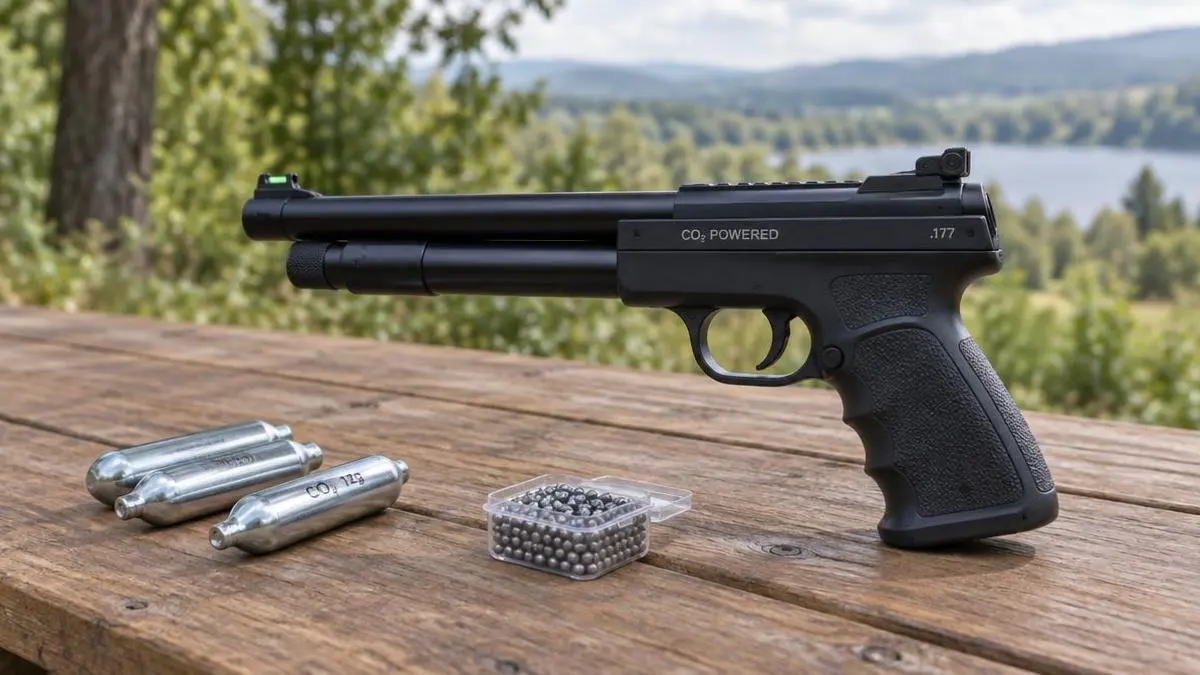
A gas-powered platform can be appealing for people who want easy operation, light recoil and a practical choice for casual target work. However, the behaviour of a gas-powered platform is not always as steady as many beginners think. Temperature, shot spacing, cartridge condition and the design of the gun all influence the result. Knowing these variables helps you pick equipment that fits your routine, instead of judging it by one velocity number. It also makes basic maintenance and safe handling easier.
What happens when the trigger is pulled
CO2 air guns use carbon dioxide, which is kept in a cartridge or a larger refillable reservoir. When the trigger releases the valve, a measured amount of gas pushes the pellet through the barrel. The gas does not burn; there is no powder charge. The sound of the gun and recoil are usually modest, although the exact experience depends on the action, barrel, ammunition and any built-in sound-reducing features.
Most CO2 pellet guns use cartridges that fit into the grip, magazine area or a separate cylinder. Some designs use reservoirs, but the same principle applies: pressure opens a valve briefly. Expanding gas supplies energy for the shot. A magazine may also index a pellet or BB, allowing shots without loading one after another.
The system is mechanically straightforward, but the gun is not pressure-neutral. A cartridge begins with gas pressure, which gradually changes as it cools and empties. A gun that feels lively at the start of a session may produce weaker shots later. That is normal behaviour, not proof that the barrel or trigger has suddenly developed a fault.
Why temperature changes velocity
The pressure available from CO2 is strongly affected by temperature. In cold conditions, the gas produces less pressure for the valve to use, so the pellet may leave the barrel more slowly. A cartridge can also become chilled during firing because some liquid CO2 turns into gas and absorbs heat as it expands. This is why a cold day and a fast string of shots can reduce airgun velocity.
Rapid firing gives the cartridge less time to recover between shots. The first few pellets may group well, followed by noticeably lower impacts or a weaker report. Some shooters call this a velocity curve. It is not necessarily a problem if the change is modest and predictable. It matters for target work because the point of impact needs to stay steady.
Allowing the gun to rest between strings can help. Do not warm a cartridge with a flame, heater, water or another improvised method, because excessive heat can create a pressure hazard. Follow the manufacturer's instructions. Accept that CO2 equipment is better suited to moderate, consistent conditions than to extreme weather.
Reading velocity claims with care
Published velocity figures can help compare platforms. They are not a guarantee of what every shooter will see. The result can change with pellet weight, pellet fit, barrel length, temperature, cartridge age and the number of shots already fired. A light projectile may produce a higher stated velocity than a heavier pellet without being better for accuracy or control.
For target shooting, consistency often matters more than the advertised figure. Watch where the shots land and whether the group opens as the cartridge cools. If equipment is available and local rules permit its use, a chronograph can show trends across a session. Notes about temperature, ammunition and shot spacing are also useful for spotting patterns.
Do not treat velocity as a shortcut for safety. Even a modest air gun can damage property, injure a person or harm an animal when used carelessly. Use a backstop, confirm what lies beyond it and keep the muzzle pointed in a safe direction whenever the gun is loaded or charged.
When CO2 makes sense
CO2 platforms suit shooters who value easy cocking, low mechanical effort and a repeatable loading routine. They can be convenient for target sessions, club-style practice and recreational shooting, where a light trigger cycle and limited recoil are welcome. Many air pistols also use a magazine format, making them engaging for controlled practice without needing a charging system.
A CO2 pistol is less attractive when performance is needed through changing weather, long strings of rapid fire or highly consistent shot-to-shot output. Cartridge availability and disposal also become part of ownership. Some users dislike the recurring need to fit a cartridge, while others prefer it to hand-pumping or managing a high-pressure fill system.
The choice becomes clearer when you compare the routine rather than one specification:
– Choose CO2 if you want easy operation, modest recoil and convenient short sessions.
– Choose a spring-powered design when you want no cartridges and are comfortable with a cocking cycle and more noticeable movement.
– Choose another power system when consistent velocity across sessions is a higher priority than compact convenience.
CO2 and spring-powered air guns are not a contest with one winner. The better match depends on how you shoot, where you store the equipment, how much effort you want between shots and how closely each shot needs to match the last.
Cartridge, magazine and maintenance checks
Install the cartridge exactly as the manual describes. A seal that is dry, damaged or incorrectly seated can allow gas to escape, sometimes producing a hiss or a sudden loss of power. Do not overtighten screws or try to correct a leak with unofficial parts. If the instructions specify an amount of lubricant for a seal or piercing area, use only that product and that amount.
Remove the cartridge according to the manufacturer's guidance. Some designs are meant to stay charged for a while, while others should be emptied after use. Leaving pressure in the system unnecessarily can stress seals; releasing it carelessly can damage components. Do not fire a pellet if the gun has not been cleared.
Keep the barrel, magazines and loading areas clean and free of oil. Inspect pellets for damage before loading, because distorted ammunition can affect feeding and accuracy. Store the gun unloaded, locked up and away from heat and moisture. Do not modify valves, springs, piercing systems or pressure controls to chase power. Such changes can make the gun unsafe and may violate local rules or the manufacturer's limits.
Safe use at home and at the range
Before shooting, identify a backstop that can safely stop the chosen ammunition and inspect it for gaps, ricochets or worn areas. Never rely on a fence, thin board, foliage or a surface you have not verified. Keep people, pets and valuable property away from the shooting line. Use appropriate eye protection for everyone nearby.
Treat the gun as loaded until you have personally checked it. Keep your finger outside the trigger guard while loading, unloading or correcting a stoppage. Point the muzzle towards the intended backstop. Stop if the report sounds weak or a pellet may be stuck in the barrel. Follow the manual for clearing that condition before firing another shot.
Airgun rules, transport requirements, discharge restrictions and age limits vary by location. Verify the rules before buying or shooting, even if the activity seems informal or takes place on private land.
A practical CO2 routine
A sensible CO2 routine is simple: inspect the equipment, understand its changing pressure, allow the CO2 to cool between strings and use the gun in a setting designed for safe target practice. These habits will not remove every variation, but they make the platform easier to understand and use responsibly.