
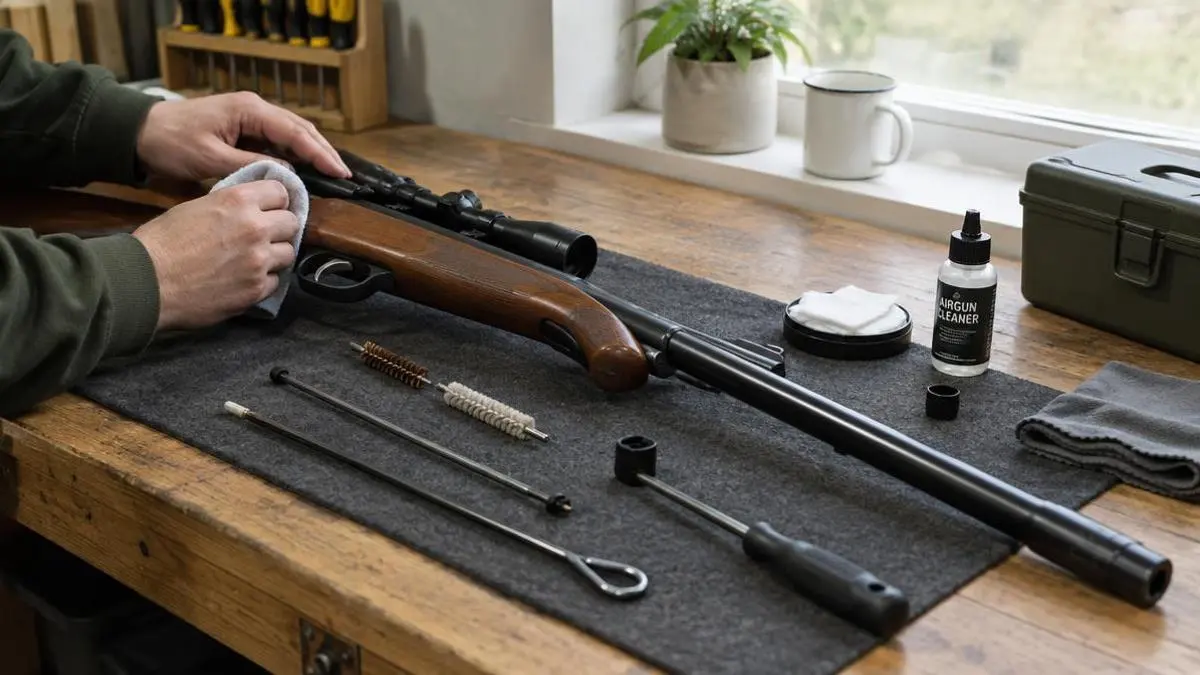
A pellet gun can start grouping shots for a reason that is not complicated: a dirty internal part, a loose screw, a failing seal or dust near the moving parts. It is tempting to change the sights or try different pellets first, but checking simple things can help before attempting more difficult changes. A short clean after shooting, followed by another check, may help the gun work properly without taking it apart.
Notice the signs before changing things
Start with the problem rather than a timetable. A sudden change in where shots hit, larger groups, a different internal noise or a stiff safety can all be reasons to check the gun. None of these signs proves that cleaning is the answer; each is a reason to stop and look before changing the sights, power or pellet type.
Begin with the simple things. Make sure the sights or scope are not loose, the handle or stock is secure, and the barrel is not blocked. Look for pellets, dirt near the back of the barrel and screws that have moved. On a CO2 gun, the problem may be the cartridge or temperature rather than dirt. On a PCP rifle, pressure problems and special parts should be dealt with as the maker says, not guessed at.
Change one thing at a time. If you clean the barrel, tighten the scope and try different pellets together, you may not know what made a difference. Recording the problem in a notebook or phone can make the next check more useful.
Make the work safe before touching the gun
Treat every airgun as loaded until you have checked it yourself. Point the front of the gun in a safe direction, apply the safety if there is one, remove the magazine or single pellet, and check the inside as the maker instructs. Keep pellets and CO2 cartridges away from the work area. A safe place to shoot remains important when checking whether the gun is empty.
Work on a stable table with good light. A soft mat can protect the handle, but it must not hide a loaded gun or make the gun unstable. Keep children, pets and other people away. Follow the rules where you live concerning handling, moving and storing the gun.
The basic tools need not be elaborate: a cloth, a cleaning rod or pull-through patches, a small soft brush and oil made for the gun. The instruction book matters more than an oil bottle. Some oils can harm parts, while others may be dangerous in certain systems. Never put oil inside a spring-piston part. Do not open a pressurised PCP system unless the maker shows you how to do so safely and you know what is involved.
Clean the inside carefully
A barrel does not need cleaning after every shooting session. Pellets can leave residue, but excessive cleaning, the wrong tool or cleaning from the wrong end can cause problems. The right time depends on the gun, the pellets and how well it shoots, so use the instruction book and the target as your guides.
If shooting has deteriorated and the outside parts look fine, unload the gun. Clean the inside using the maker's recommended method. A pull-through may be suitable if the design allows it, because it helps avoid damaging the front part. If a cleaning rod is permitted, use the correct size and prevent hard contact with the inside. Do not push a patch through a blockage.
Do not leave cleaning fluid in the barrel. Follow the cleaner's directions, use patches until they come out clean, and leave the inside as the maker recommends. Some guns work better with a little residue, so a perfectly clean barrel is not always better. After cleaning, shoot only in a legal place and let the gun settle before checking the groups.
Inspect the front and back parts. Dirt at the back can alter how the gun works, while damage at the front can affect how pellets leave it. If you see damage, stop trying to solve it with cleaning and seek professional help.
Check seals, screws and moving parts
Looking after the outside is often preferable to taking the gun apart. Wipe water, fingerprints and dust from the barrel, internal parts and handle after use. Pay attention to the area near the back and to any visible seals. Do not remove an O-ring or push a seal simply to inspect it. A seal that looks dry, cracked or out of place needs attention unless the book explains how to fix it.
Check the screws on the handle, scope mounts, sights and internal parts for movement. Tighten them with the right tool and only as the maker recommends. Overtightening can strip threads, crush the handle or create another problem. Movement needs attention, but adding glue or changing screws without advice is unwise.
Lubricate carefully. Use an approved oil, in the right place and amount. Usually, a drop in one place is better than spraying oil inside. Keep oil away from the trigger's interior and from the pellets. If the trigger feels rough, do not flood it with oil; have it inspected professionally unless the book explains how to clean it.
For a spring-piston gun, do not fire it without a pellet or dismantle the spring and internal parts as a simple check. For CO2 and PCP guns, never remove parts under pressure merely because the gun is not working properly. Pressure work may require specific tools and procedures.
Keep it ready for next time
Good storage prevents many problems. Wipe the gun down, make sure it is unloaded, and put it somewhere others cannot access. A locked box, cabinet or safe is better than leaving it in a car, a corner or another exposed place. Keep pellets and other ammunition separately if the rules or requirements of your home say so.
Storage varies with the power system. A CO2 cartridge may need to be removed or left in place, as the maker specifies; either choice can damage the inside if done incorrectly. PCP guns should be stored at the pressure the maker specifies, not guessed at. Spring-piston guns should be left unloaded unless the book says otherwise.
Before going out, look into the barrel from a safe direction, check that the internal parts work normally, and make sure the sights or scope remain secure. This quick check is faster than dealing with problems at the place where you shoot.
The best care is careful care: make the gun safe, remove dirt, check the parts that affect shooting, use the right products and store it safely. Regular checks can help it shoot better and last longer, but maintenance should not replace a proper repair when a seal, pressure part or structural part is involved. If you are unsure, stop, check the book and follow the rules where you shoot.